
Skip to content
New Concept Auto Service Honest · Accurate · New Concept
Mon–Fri · 7:30am–5:30pm 5 Johnson County Shops
№ 01
A/C Compressor Replacement

A/C Compressor Replacement

Expert A/C Compressor Replacement in Overland Park, South Overland Park, Merriam, Shawnee & Olathe, KS.

Book Service
ASE-Certified Technicians5-Yr / 50k-Mile WarrantyHonest Photo-Documented EstimatesTechNet Affiliated
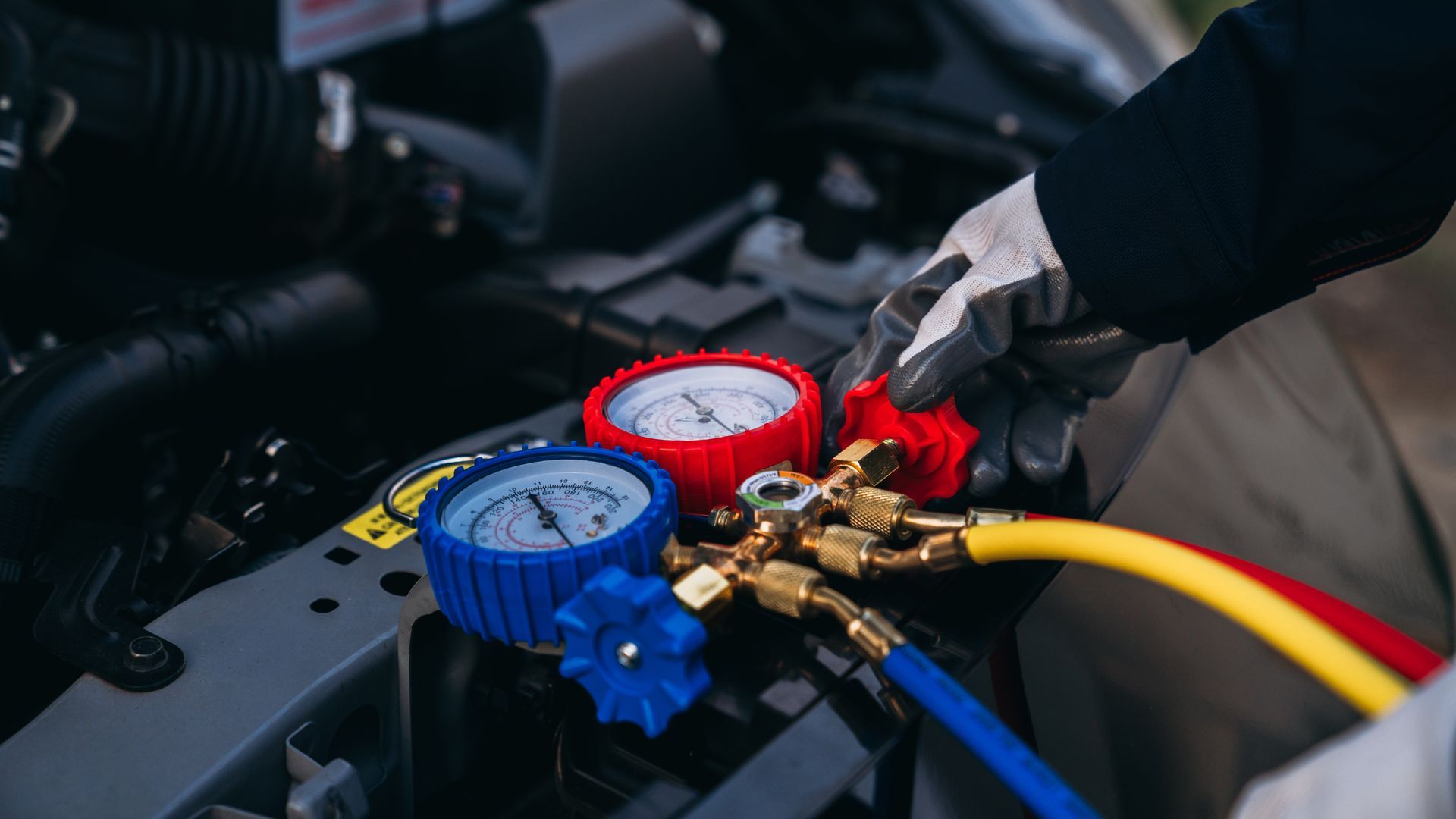
OverviewFig. 02

The compressor is the heart of your air conditioning — when it quits, the cold air goes with it.

The A/C compressor is the pump that pressurizes refrigerant and pushes it around the system. It's driven by the engine through a belt and clutch, so it's working hard every time the air is on. When the clutch starts to drag, the bearings go noisy, or the internals seize, you lose cold air and sometimes hear a loud squeal or clatter from the front of the engine.

A failing compressor is one of the few A/C parts that can take the rest of the system with it. When internals come apart, metal debris spreads through the lines and condenser, so simply bolting on a new compressor without addressing that contamination usually ends in a second failure. We diagnose the real cause first, then replace and clean the system the right way.

Symptom Explorer

Signs your A/C compressor may be failing

These point to a likely compressor problem, but overlap with other A/C faults — a professional inspection confirms the cause before any part is replaced.

A note on symptoms — These signs point toward a likely cause — they are not a diagnosis. A professional inspection confirms what is actually happening before any parts are replaced.

If the fan blows but the air never gets cold, the compressor may not be engaging or building pressure. A low refrigerant charge or electrical fault can look the same, so we gauge the system and check whether the clutch is actually cycling before pointing at the compressor.

Worn compressor bearings or a dragging clutch often announce themselves with noise that changes the moment you switch the A/C on or off. That noise is worth inspecting early, because a seizing compressor can also shred or throw the drive belt.

The compressor clutch should click in and stay engaged when cooling is demanded. A clutch that never engages, or one that rapidly cycles on and off, can point to a failing clutch, low charge, or a control-side fault that needs to be traced.

A seized compressor pulley can glaze or burn the drive belt as it fights to turn, producing a hot-rubber odor. This likely means the compressor is binding and should be checked before the belt lets go.

Refrigerant carries lubricating oil, so an oily film at the compressor or its fittings can signal a leaking shaft seal. It usually means refrigerant is escaping, which an inspection and leak check can confirm.

What's Included№ 04 — Scope of Work

What the job involves

Replacing a compressor is more than swapping the pump — protecting the new one from leftover contamination is what makes the repair last.

01

Confirm the diagnosis

We verify the compressor is actually the failure — checking clutch engagement, system pressures, and electrical control — so you're not replacing a good part.

02

Recover the refrigerant

The existing refrigerant is recovered with proper equipment rather than vented, as required, before the system is opened.

03

Remove the failed compressor

The belt is relieved and the old compressor is unbolted and disconnected from the high- and low-side lines.

04

Flush the system when debris is present

If the old compressor came apart internally, we flush the lines and condenser to remove metal debris, since leftover contamination is a leading cause of repeat failures.

05

Install the new compressor with the right oil charge

The replacement is fitted with fresh seals and the correct type and amount of refrigerant oil, and torqued to specification.

06

Replace related wear parts as needed

The receiver-drier or accumulator and the orifice tube or expansion valve are commonly replaced with a compressor to protect the new unit.

07

Evacuate, recharge, and performance test

The system is vacuumed down to pull out moisture, recharged to the manufacturer's specification, and tested for vent temperature and pressures before you get the keys back.

The Process

What to expect, start to finish

The same disciplined workflow on every job — so you always know what's happening and why.

  1. 01

    Initial inspection

    We start by listening to how the vehicle is behaving, then put it on the lift for a hands-on look at the system you came in for.

  2. 02

    Diagnostic testing

    Where a fault is electronic or intermittent, we scan control modules and test live data instead of guessing at parts.

  3. 03

    Findings & explanation

    You get a plain-language rundown of what we found — often with photos — so the problem is clear before any work is quoted.

  4. 04

    Repair recommendations

    We separate what needs attention now from what can safely wait, with an honest written estimate.

  5. 05

    Your authorization

    Nothing happens until you approve it. No surprise add-ons, no pressure.

  6. 06

    Professional repair

    ASE-certified technicians complete the work with quality parts, torqued and fitted to spec.

  7. 07

    Quality verification

    We re-test and road-check the repair, then hand the vehicle back backed by our nationwide warranty.

When To Come In№ 06

When compressor replacement makes sense

Watch for
  • No cold air with pressures that won't build
  • Loud bearing or clutch noise tied to the A/C
  • A clutch that won't engage or stay engaged
  • Metal debris found in the refrigerant oil
If you wait
  • A seizing compressor can throw or burn the drive belt
  • Internal debris can migrate and damage the condenser
  • Skipping the flush often causes a repeat failure
  • Running without cold air strains no other system, but comfort and defrost suffer
Safety first
  • A shredded belt can disable the charging or cooling it also drives
  • Refrigerant must be recovered, never vented
  • We confirm the cause before quoting a compressor
  • A free second opinion is always available here
QuestionsFAQ

Frequently asked questions

Sometimes, but it depends on how it failed. If the old compressor came apart internally, metal debris is usually spread through the lines and condenser, and installing a new compressor into a dirty system is a common cause of a second failure. That's why the receiver-drier and orifice tube or expansion valve are often replaced and the system flushed at the same time.
Warm air after a compressor job usually points to something else in the system — a remaining leak, an undercharge, or a control fault keeping the clutch from engaging. We re-check pressures, confirm the clutch is cycling, and leak-test rather than assuming the new part is bad.
There's no fixed number — it depends on how the system was serviced, whether contamination was flushed out, and how often the A/C is used. A compressor installed into a properly cleaned and correctly charged system has the best chance of a long life, which is exactly how we approach the job.
Qualifying parts and labor are backed by our 5-year/50,000-mile nationwide warranty, honored at thousands of participating shops across the country. We'll confirm the coverage that applies to your specific repair when we write the estimate.
Find A LocationFive Johnson County shops

Service near you

Book at the New Concept shop that's most convenient — same ASE-certified standards and nationwide warranty at every location.

01

Overland Park

9573 W 87th St, Overland Park, KS 66212
02

Merriam

6032 Merriam Dr, Merriam, KS 66203
03

Shawnee

4119 Bonner Industrial Dr, Shawnee, KS 66226
04

Olathe

128 N Mahaffie St, Olathe, KS 66061
05

South Overland Park

7601 W 119th St, Overland Park, KS 66213
Book an Appointment

Ready when you are.

Book online in under a minute, or call and talk to a real person. Honest estimates, no pressure — your dealership alternative in Johnson County.