
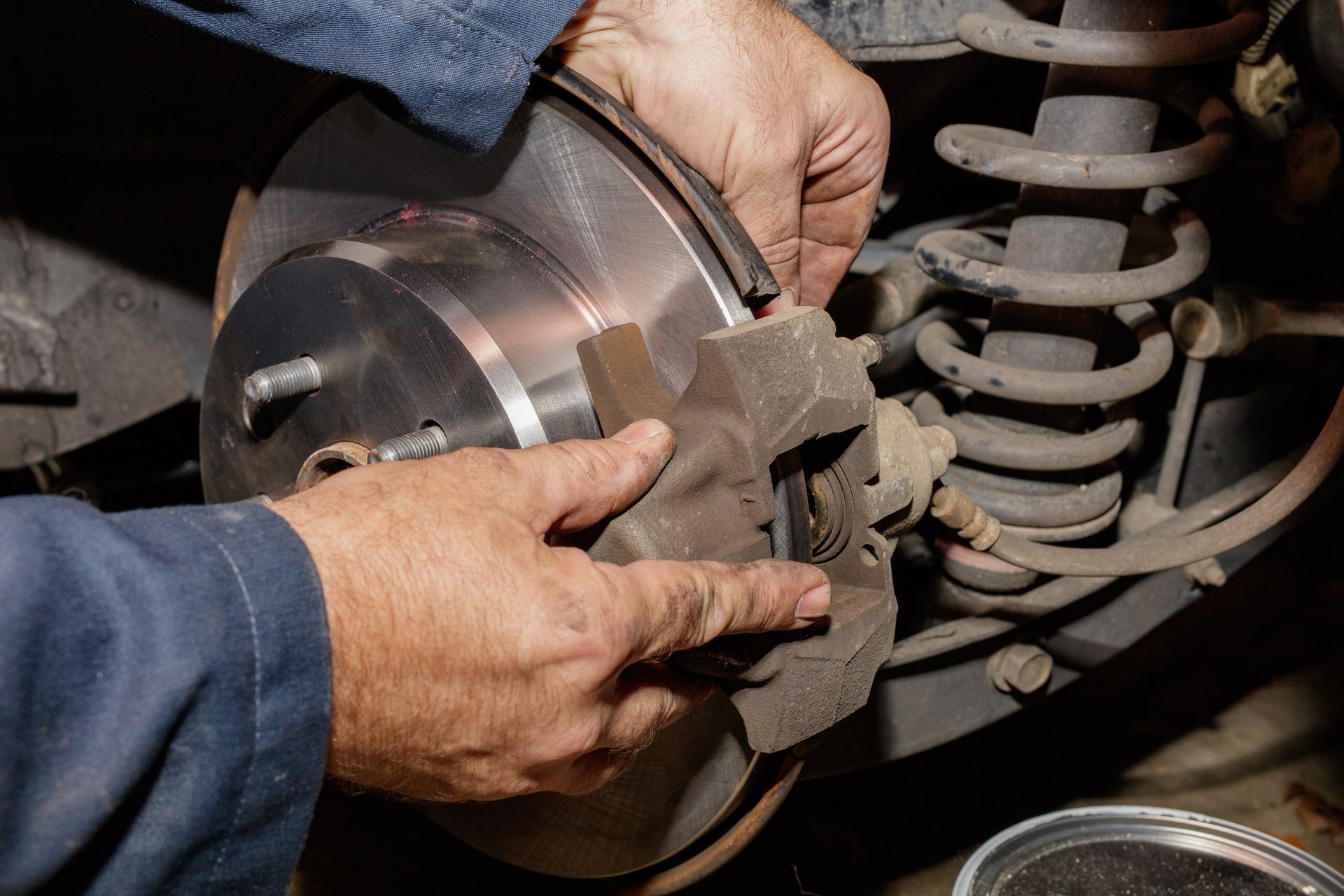
A caliper does quiet, high-pressure work: it takes fluid pressure from the pedal and converts it into the clamp that stops the car, then releases cleanly so the pads aren't always touching the rotor. When a piston or slide seizes with age and corrosion, that release stops happening — and one wheel drags, overheats, and chews through pads while the rotor cooks.
At New Concept, a caliper complaint is diagnosed by how the brakes behave, not by swapping parts. We look for a car that pulls under braking, a wheel that runs hot, uneven pad wear, or a pedal that doesn't release — then check the piston, the slide pins, and the hydraulics. From there we give you a straight call on whether a rebuild or a replacement is the right fix.