
Skip to content
New Concept Auto Service Honest · Accurate · New Concept
Mon–Fri · 7:30am–5:30pm 5 Johnson County Shops
№ 01
Electrical & Charging System Repair

Electrical & Charging System Repair

Expert Electrical & Charging System Repair in Overland Park, South Overland Park, Merriam, Shawnee & Olathe, KS.

Book Service
ASE-Certified Technicians5-Yr / 50k-Mile WarrantyFree Check-Engine-Light ScanAAA Approved
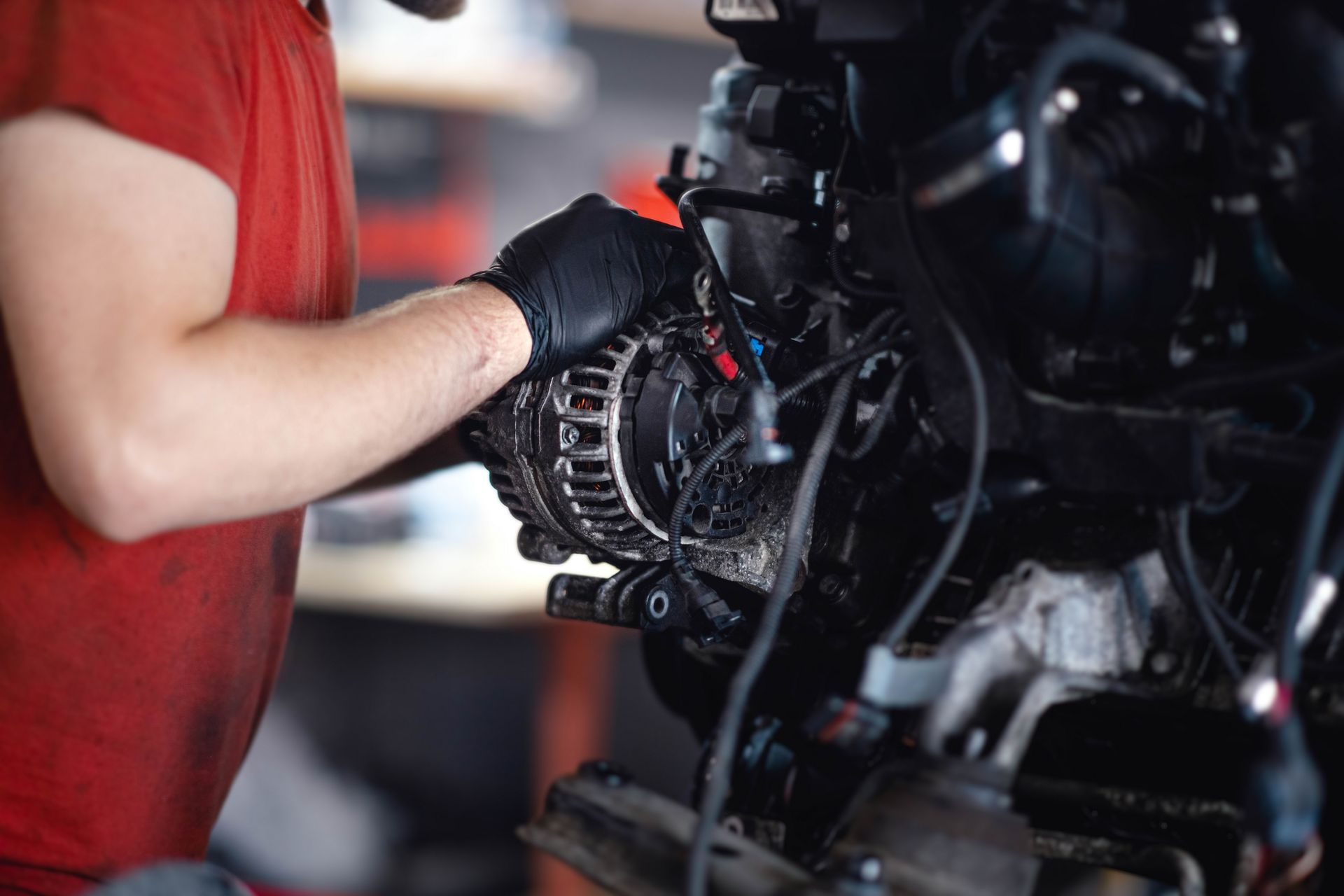
OverviewFig. 02

A modern car is a rolling network of circuits, and when the charging system falters or a wire corrodes, the symptoms can show up almost anywhere but the real fault.

Electrical trouble is rarely where it seems. A battery that dies overnight might be a failing alternator, a dead cell, or a circuit quietly draining power while the car sleeps — and swapping the battery only buys a few days if the real cause is upstream. Flickering lights, a slow crank, or accessories that drop out point to the system that generates, stores, and distributes power, not to a single easy part.

At New Concept, an electrical visit starts with testing the whole charging loop — battery, alternator output, starter draw, grounds, and connections — and reading what the control modules have recorded, before any part is condemned. You get a traced, measured answer about where the power is actually being lost, instead of a parts-swap that leaves you stranded again next week.

Why Diagnostics Matter

Traced, not guessed at

Electrical faults are the easiest to throw parts at and the hardest to fix that way. A dead battery in the morning can be a worn battery, an alternator that isn't charging, a bad ground, or a parasitic draw pulling current all night — and each one looks identical from the driver's seat. Replacing the battery on a car with a draw just resets the clock on the next no-start.

We test battery state and the alternator's actual output, measure starter draw, check grounds and connections for voltage drop, and read the modules for stored faults. For an intermittent drain, we measure the parasitic current directly and isolate the circuit responsible. That's how an electrical estimate reflects the real fault rather than the first part that's convenient to replace.

  • 01Charging output measured under load, not assumed
  • 02Grounds & connections tested for voltage drop
  • 03Parasitic draw measured and isolated to a circuit
  • 04Modules scanned for stored electrical faults
Symptom Explorer

Signs of an electrical or charging problem

Electrical trouble usually shows up as something that cranks slowly, dims, flickers, or quits. Match what you're noticing to the signs below — each points to a likely cause a professional inspection can confirm.

A note on symptoms — These signs point to likely causes, not a definitive diagnosis. Charging-system and circuit testing are the only way to confirm which component is at fault.

A slow, labored crank or a no-crank can come from a weak battery, poor connections, a failing starter, or a charging system that isn't keeping the battery topped up. Because the fix is different for each, we test the battery, the starter draw, and the charging output rather than assuming it's one part.

Lights that pulse with engine speed or dim at idle often point to an alternator that isn't holding a steady output, or to a loose or corroded connection in the charging circuit. Since dimming can also stress other electronics, it's worth measuring the system voltage to find where it's sagging.

The battery-shaped light generally means the charging system isn't keeping up — commonly a failing alternator, a broken belt, or a wiring fault — not necessarily a bad battery. Driving on it risks a stall once the battery drains, so it's worth a prompt check to find the actual break in the loop.

Accessories that work intermittently, slow down, or quit can trace to a failing relay, a blown fuse, a corroded ground, or a wiring fault rather than the device itself. We follow the circuit to the point where power or ground is being lost instead of replacing the component first.

A battery that drains repeatedly usually isn't a run of bad batteries — it's often an alternator not charging fully or a parasitic draw pulling current while the car is off. We measure the key-off current and isolate the circuit responsible so the replacement actually sticks.

A hot-electronics smell, fuses that blow again right after replacement, or discolored connectors point to a short, an overloaded circuit, or resistance building heat at a bad connection. These are worth stopping for, since they can affect reliability and, in some cases, safety.

How It WorksComponent Explorer

The parts that power your car

01

Battery

The reservoir that starts the engine and steadies voltage for everything electrical. It's a wear item that fades with age and temperature, but a battery that keeps dying is often a symptom of a charging or draw problem rather than the root cause. It's tested under load as the first step.

02

Alternator

The generator that recharges the battery and runs the car's electrical load while the engine is running. A weak or failing alternator shows up as dimming lights, a charging warning, or a battery that never stays full. Its output is measured under load, not just checked for a pulse.

03

Starter

The motor that spins the engine over to start it, drawing a heavy burst of current from the battery. A failing starter can cause a slow crank, a single click, or intermittent no-starts. Measuring its current draw separates a bad starter from a weak battery or a connection problem.

04

Wiring & grounds

The harnesses, connectors, and ground straps that carry power and complete every circuit. A corroded ground or loose connection adds resistance that can mimic a failing part anywhere downstream, which is why connections are tested for voltage drop as part of the diagnosis.

05

Control modules

The computers that manage the engine, body, and accessory functions and talk to each other over a network. When a module or its communication faults, the symptoms can be scattered and odd, so the modules are scanned for stored codes and checked for proper power and ground.

06

Fuses & relays

The protective devices that interrupt a circuit under an overload and switch higher-current loads on and off. A blown fuse or a tired relay can take out one function entirely, and a fuse that blows again points to a short worth tracing rather than just replacing.

What's Included№ 06 — Scope of Work

Electrical & charging repairs we handle

From a no-start diagnosis to tracing a hidden draw, our electrical work covers the charging system, the starting system, and the wiring that ties the vehicle together.

01

Alternator replacement

Replacing an alternator that isn't charging and confirming the belt, wiring, and output are right afterward.

Repair details
02

Starter replacement

Replacing a failing starter after measuring its draw, so a weak battery or bad connection isn't mistaken for it.

Repair details
03

Battery testing & replacement

Load-testing the battery and the charging system, and replacing the battery when it's genuinely the worn part.

Repair details
04

Charging system diagnosis

Measuring alternator output under load and checking the belt and wiring behind a charging warning light.

05

Parasitic draw diagnosis

Measuring key-off current and isolating the circuit that's draining the battery while the car sleeps.

06

Wiring & connector repair

Repairing corroded grounds, damaged harnesses, and loose connectors that add resistance or cut power.

07

Lighting repair

Diagnosing and fixing headlights, brake lights, and interior lighting faults, from bulbs to the circuits behind them.

08

Fuse & relay diagnosis

Finding why a fuse keeps blowing or a relay has quit, and tracing the short or overload behind it.

09

Module & communication diagnosis

Scanning control modules for stored faults and checking their power, ground, and network communication.

The Process

What to expect, start to finish

The same disciplined workflow on every job — so you always know what's happening and why.

  1. 01

    Initial inspection

    We start by listening to how the vehicle is behaving, then put it on the lift for a hands-on look at the system you came in for.

  2. 02

    Diagnostic testing

    Where a fault is electronic or intermittent, we scan control modules and test live data instead of guessing at parts.

  3. 03

    Findings & explanation

    You get a plain-language rundown of what we found — often with photos — so the problem is clear before any work is quoted.

  4. 04

    Repair recommendations

    We separate what needs attention now from what can safely wait, with an honest written estimate.

  5. 05

    Your authorization

    Nothing happens until you approve it. No surprise add-ons, no pressure.

  6. 06

    Professional repair

    ASE-certified technicians complete the work with quality parts, torqued and fitted to spec.

  7. 07

    Quality verification

    We re-test and road-check the repair, then hand the vehicle back backed by our nationwide warranty.

When To Come In№ 08

When to have the electrical system checked

Charging and electrical faults tend to give warning before they strand you. These are the moments worth a look.

Watch for
  • A slow crank or an intermittent no-start
  • Dimming or flickering lights
  • A battery or charging warning light
  • A battery that keeps going dead
If you wait
  • A failing alternator eventually drains the battery and stalls
  • A parasitic draw kills a healthy battery overnight
  • A corroded ground can mimic a failing part downstream
  • Repeat jump-starts stress the alternator and battery further
Stay ahead
  • Have the charging system tested when the battery is replaced
  • Keep battery terminals and grounds clean and tight
  • Address a charging light promptly, before a stall
  • Have accessory faults traced early, before they spread
Safety first
  • Lighting and defroster faults affect visibility
  • A stall from a charging failure can happen in traffic
  • A fuse that blows repeatedly points to a short worth tracing
  • A second opinion on any electrical estimate is always free here
QuestionsFAQ

Frequently asked questions

A fresh battery that keeps going dead usually isn't the battery at all. The two most common causes are an alternator that isn't charging fully and a parasitic draw pulling current while the car is off. We measure the key-off current and the charging output to find which it is, so the replacement you already paid for actually holds.
They cause overlapping symptoms, which is exactly why guessing is expensive. A slow or no-crank can be any of the three. We load-test the battery, measure the alternator's output while running, and check the starter's current draw, so the recommendation points at the part that's genuinely failing rather than the easiest one to swap.
A parasitic draw is a circuit that keeps pulling power after the car is shut off and everything should be asleep — a stuck relay, a module that won't power down, or a faulty accessory. Even a small draw will flatten a battery over a night or two. We measure that key-off current directly and isolate the circuit responsible.
It's risky. That light generally means the charging system isn't keeping up, so the car is running down the battery as you drive and can stall once it's depleted — sometimes in traffic. It's worth getting the charging loop checked promptly rather than waiting for it to quit.
We look for the cause, not just the symptom. An alternator or starter that failed early often did so because of a wiring, ground, or load problem that will take out the new part too. Finding and correcting that is the difference between a repair that lasts and one you're back for in a month.
Find A LocationFive Johnson County shops

Service near you

Book at the New Concept shop that's most convenient — same ASE-certified standards and nationwide warranty at every location.

01

Overland Park

9573 W 87th St, Overland Park, KS 66212
02

Merriam

6032 Merriam Dr, Merriam, KS 66203
03

Shawnee

4119 Bonner Industrial Dr, Shawnee, KS 66226
04

Olathe

128 N Mahaffie St, Olathe, KS 66061
05

South Overland Park

7601 W 119th St, Overland Park, KS 66213
Book an Appointment

Ready when you are.

Book online in under a minute, or call and talk to a real person. Honest estimates, no pressure — your dealership alternative in Johnson County.