
Skip to content
New Concept Auto Service Honest · Accurate · New Concept
Mon–Fri · 7:30am–5:30pm 5 Johnson County Shops
№ 01
Transmission & Drivetrain Repair

Transmission & Drivetrain Repair

Expert Transmission & Drivetrain Repair in Overland Park, South Overland Park, Merriam, Shawnee & Olathe, KS.

Book Service
ASE-Certified TechniciansFree Second Opinion5-Yr / 50k-Mile WarrantyHonest Repair-or-Replace Advice
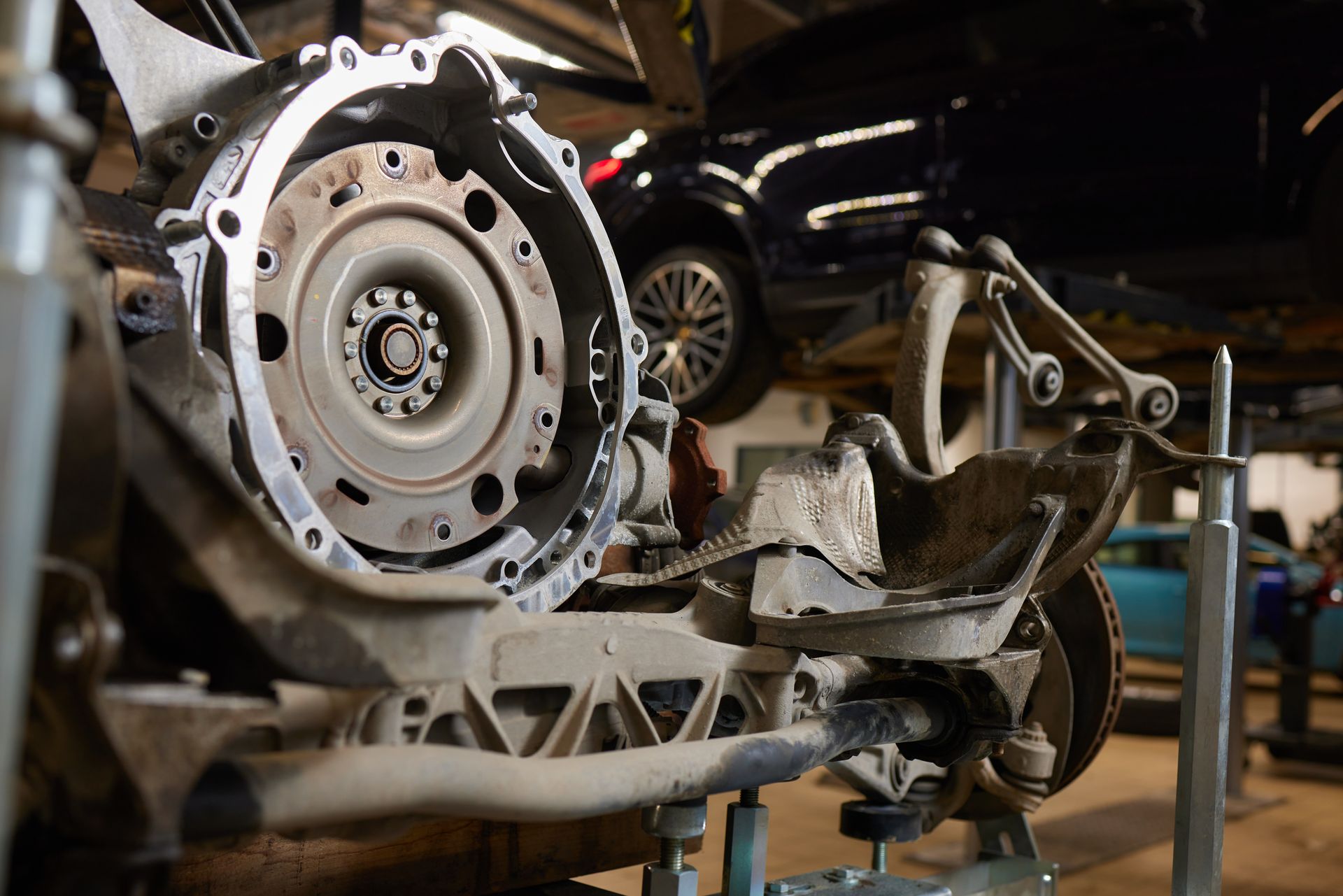
OverviewFig. 02

The transmission is what turns engine power into forward motion — and when it starts slipping or shifting hard, a straight answer on repair versus replacement matters more than ever.

Transmission trouble rarely appears all at once. A shift that feels a half-second late, a brief slip as the car gathers speed, or a stain on the driveway can be the first hint that something in the drivetrain is changing. Caught early, many of these point to fluid condition or a single component rather than the whole unit.

At New Concept, a transmission visit starts with checking the fluid, pulling any stored codes, and driving the vehicle to feel the symptom for ourselves — before anyone talks about a rebuild. Automatics, CVTs, and the axles and transfer cases that send power to the wheels each fail differently, so the recommendation follows what we actually find.

Symptom Explorer

Signs your transmission needs a look

Drivetrain symptoms are easy to talk yourself out of until they get worse. These are the ones worth acting on — each points to a likely cause, but only an inspection confirms it.

A note on symptoms — These signs suggest a likely cause, not a diagnosis. A professional inspection is the only way to know what's actually happening inside the transmission.

When RPMs climb without a matching gain in speed, the transmission is likely slipping — the clutches or bands inside aren't holding the way they should. Low or degraded fluid is a common culprit, but worn internal parts are also possible. Slipping tends to get worse, so it's worth checking sooner rather than later.

A pause of a second or more after selecting a gear — sometimes with a clunk when it finally catches — can mean low fluid pressure, a worn component, or a valve-body issue. On a cold morning it may be more noticeable. We check fluid level and condition first, since that's the simplest explanation.

Shifts that bang into place, hesitate, or feel harsh instead of smooth can trace back to fluid condition, solenoid behavior, or internal wear. A scan often reveals whether the vehicle is storing a shift-related code. The fix ranges from a fluid service to valve-body work depending on what we find.

Automatic transmission fluid is usually red when fresh and darkens toward brown as it ages. A puddle or drip means fluid is escaping somewhere it shouldn't — a cooler line, a seal, or the pan gasket. Because the transmission depends on fluid pressure to work, a leak is worth tracing promptly.

A whine that rises with speed, a hum that changes when you turn, or a grinding sensation can come from the transmission, a differential, or a worn CV axle or bearing. Pinpointing the source takes a road test and inspection rather than a guess, since several drivetrain parts can make similar sounds.

A transmission can set a check-engine code or trigger a dedicated temperature warning when it's running hot or has stored a fault. Overheating is one of the harder things on a transmission, so a temp light shouldn't be ignored. We read the live data to see what the vehicle is actually reporting.

Why Diagnostics Matter

Why we drive it before we quote it

A slipping sensation can be low fluid, a tired solenoid, or genuine internal wear — and those are very different repairs with very different costs. Quoting a rebuild off a symptom alone does nobody any favors. The point of a drivetrain diagnosis is to separate the inexpensive fixes from the big ones honestly.

We check fluid level, color, and smell, scan for stored and live transmission codes, and road-test the vehicle to reproduce what you're feeling. Only once we understand the symptom do we lay out the options — and if a fluid service or a single component solves it, that's what we'll tell you.

  • 01Fluid level, color & smell checked by hand
  • 02Stored and live shift codes read, not assumed
  • 03Road-tested to reproduce the actual symptom
  • 04Repair-or-replace options explained in plain terms
How It WorksComponent Explorer

Inside the drivetrain

01

Torque converter

On an automatic, this fluid coupling connects the engine to the transmission and multiplies torque from a stop. A converter that shudders or locks up unevenly can feel like a slip or vibration, so it's one of the things we evaluate before assuming the trouble is deeper inside.

02

Clutches & bands

These internal friction elements apply and release to select gears inside an automatic. As they wear, shifts can slip or feel soft. Clean fluid helps them last; contaminated fluid accelerates their wear, which is part of why fluid condition matters so much.

03

Valve body

Often called the brain of the transmission, the valve body routes hydraulic pressure to engage the right gear at the right time. A sticking valve or solenoid here can cause delayed, harsh, or erratic shifts, and it's sometimes serviceable without replacing the whole unit.

04

Transmission fluid & cooler

Fluid both lubricates and carries the hydraulic pressure that makes an automatic shift, while the cooler keeps it from overheating. Fluid that's burnt, low, or past its service life is behind a surprising number of shifting complaints — which is why we check it first.

05

CV axles & joints

On front- and all-wheel-drive vehicles, CV axles transfer power to the wheels while flexing with steering and suspension. A clicking sound in turns or a torn axle boot points here, and a worn axle can mimic a transmission noise.

06

Differential & transfer case

The differential lets the drive wheels turn at different speeds, and on AWD and 4WD vehicles the transfer case splits power between axles. Both rely on their own fluid and can produce whines or clunks when that fluid or their internal gears are worn.

What's Included№ 06 — Scope of Work

Transmission & drivetrain services we handle

From a simple fluid service to axle and driveline work, we cover the parts that move your vehicle down the road — and we're honest about when a repair makes more sense than a full replacement.

01

Transmission fluid & filter service

Replacing tired or burnt fluid and the filter to restore proper pressure and protect the clutches inside.

Repair details
02

CV axle replacement

Replacing a worn or torn CV axle that clicks in turns or leaks grease from a split boot.

Repair details
03

Transmission leak diagnosis & repair

Tracing a red or brown fluid leak to its source — a seal, gasket, or cooler line — and sealing it before it starves the transmission.

04

Shift-quality diagnosis

Road-testing and scanning to pin down slipping, delayed, or harsh shifts before any parts are replaced.

05

Valve body & solenoid service

Addressing hydraulic and electronic shift controls when the symptom points to the valve body rather than the whole unit.

06

Transmission cooler & line repair

Repairing or replacing cooler lines and components that keep transmission fluid from overheating.

07

Differential & transfer-case service

Servicing driveline fluids and addressing whines or clunks from the differential or transfer case on AWD and 4WD vehicles.

08

CVT service

Inspecting and servicing continuously variable transmissions, which use their own specific fluid and shift logic.

09

Transmission replacement & rebuild referral

When a transmission is genuinely beyond repair, we lay out the replacement and rebuild options clearly, with no pressure.

When To Come In№ 07

When to have your transmission checked

Drivetrain problems are far cheaper to address early. Here's what should put a transmission visit on your calendar.

Watch for
  • Slipping, delayed, or harsh shifts
  • A red or brown puddle under the car
  • Whining, humming, or grinding while driving
  • A check-engine or transmission-temp light
If you wait
  • Low or burnt fluid accelerates internal clutch wear
  • A small leak can starve the transmission and overheat it
  • Driving on a slip strains parts that are still healthy
  • Ignoring the temp light risks heat damage to the unit
Stay ahead
  • Service transmission fluid on your manual's interval
  • Have leaks traced while the fluid level is still fine
  • Address new noises before they define themselves
  • Ask for a free second opinion before major work
Safety first
  • A transmission that won't engage can leave you stranded
  • Sudden slipping while merging can be hazardous
  • Grinding from a CV axle shouldn't be driven on long
  • We'll tell you honestly if it's safe to keep driving
The Process

What to expect, start to finish

The same disciplined workflow on every job — so you always know what's happening and why.

  1. 01

    Initial inspection

    We start by listening to how the vehicle is behaving, then put it on the lift for a hands-on look at the system you came in for.

  2. 02

    Diagnostic testing

    Where a fault is electronic or intermittent, we scan control modules and test live data instead of guessing at parts.

  3. 03

    Findings & explanation

    You get a plain-language rundown of what we found — often with photos — so the problem is clear before any work is quoted.

  4. 04

    Repair recommendations

    We separate what needs attention now from what can safely wait, with an honest written estimate.

  5. 05

    Your authorization

    Nothing happens until you approve it. No surprise add-ons, no pressure.

  6. 06

    Professional repair

    ASE-certified technicians complete the work with quality parts, torqued and fitted to spec.

  7. 07

    Quality verification

    We re-test and road-check the repair, then hand the vehicle back backed by our nationwide warranty.

QuestionsFAQ

Frequently asked questions

No — and that's exactly why we check fluid and scan the vehicle before quoting anything. Slipping can come from low or degraded fluid, a tired solenoid, or genuine internal wear, and those range from an inexpensive service to a major repair. We confirm the cause first, then give you honest options.
It depends on the vehicle and how you drive — some automatics have fairly long intervals, while towing, heavy traffic, and heat shorten them. The best source is your owner's manual, and we're glad to check your fluid's condition at any visit. Fresh fluid is one of the cheapest ways to protect a transmission.
A repair addresses a specific problem — a leak, a solenoid, a valve-body issue, or an axle — without opening the whole transmission. A rebuild means disassembling the unit and replacing worn internal parts. We always look for the targeted fix first and only discuss a rebuild or replacement when the damage genuinely calls for it.
Yes. A CVT is a type of automatic that uses belts or chains and pulleys instead of fixed gears, and it relies on its own specific fluid. We service CVTs and diagnose their symptoms, and because CVT fluid is not interchangeable with standard transmission fluid, using the correct type is especially important.
Absolutely, and ours is free. Transmission work is one of the bigger repairs a car can need, so it's worth confirming the diagnosis. Bring the other shop's estimate and we'll inspect the vehicle and give you an honest written comparison, no pressure either way.
Find A LocationFive Johnson County shops

Service near you

Book at the New Concept shop that's most convenient — same ASE-certified standards and nationwide warranty at every location.

01

Overland Park

9573 W 87th St, Overland Park, KS 66212
02

Merriam

6032 Merriam Dr, Merriam, KS 66203
03

Shawnee

4119 Bonner Industrial Dr, Shawnee, KS 66226
04

Olathe

128 N Mahaffie St, Olathe, KS 66061
05

South Overland Park

7601 W 119th St, Overland Park, KS 66213
Book an Appointment

Ready when you are.

Book online in under a minute, or call and talk to a real person. Honest estimates, no pressure — your dealership alternative in Johnson County.