
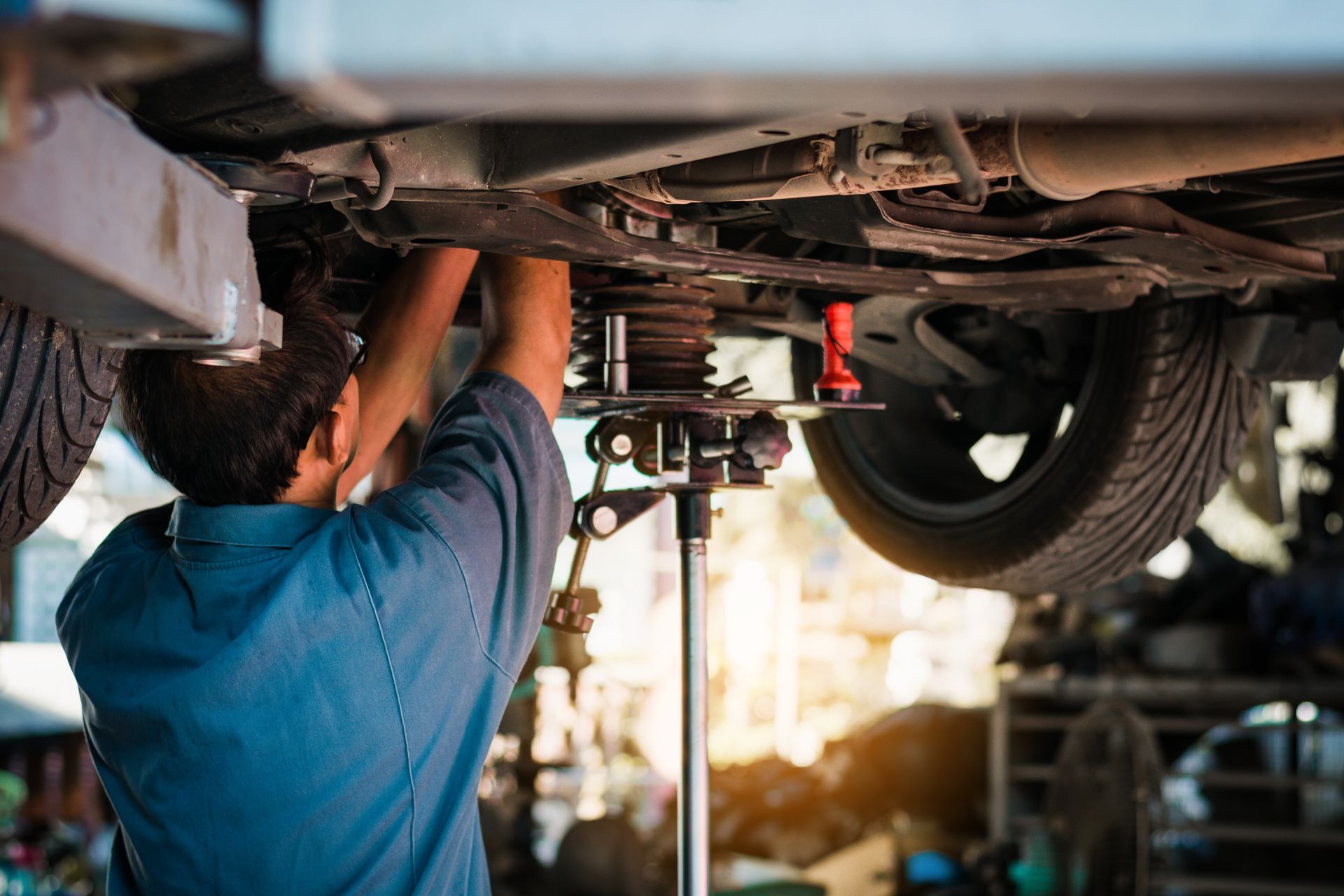
A shock absorber's one job is to control motion. The spring supports the vehicle's weight and absorbs bumps; the shock dampens the spring so the body doesn't keep bouncing afterward. Inside each shock, a piston pushes hydraulic fluid through small valves to turn that bounce into heat and bleed it off, keeping the tire pressed to the road instead of hopping over it.
Because shocks fade gradually, the decline is easy to miss — the ride just slowly gets looser and the car floats more over dips and railroad tracks. At New Concept, a shock inspection looks at how the vehicle actually settles, checks for leaking fluid on the shock bodies, and ties what we find to how your tires are wearing before anything is recommended.