
Skip to content
New Concept Auto Service Honest · Accurate · New Concept
Mon–Fri · 7:30am–5:30pm 5 Johnson County Shops
№ 01
Exhaust & Emissions Repair

Exhaust & Emissions Repair

Expert Exhaust & Emissions Repair in Overland Park, South Overland Park, Merriam, Shawnee & Olathe, KS.

Book Service
ASE-Certified TechniciansFree Check-Engine-Light Scan5-Yr / 50k-Mile WarrantyHonest, Documented Findings
OverviewFig. 02

Your exhaust system does more than quiet the engine — it routes dangerous gases safely away and keeps emissions in check, so a leak or a failed sensor is both a comfort and a safety issue.

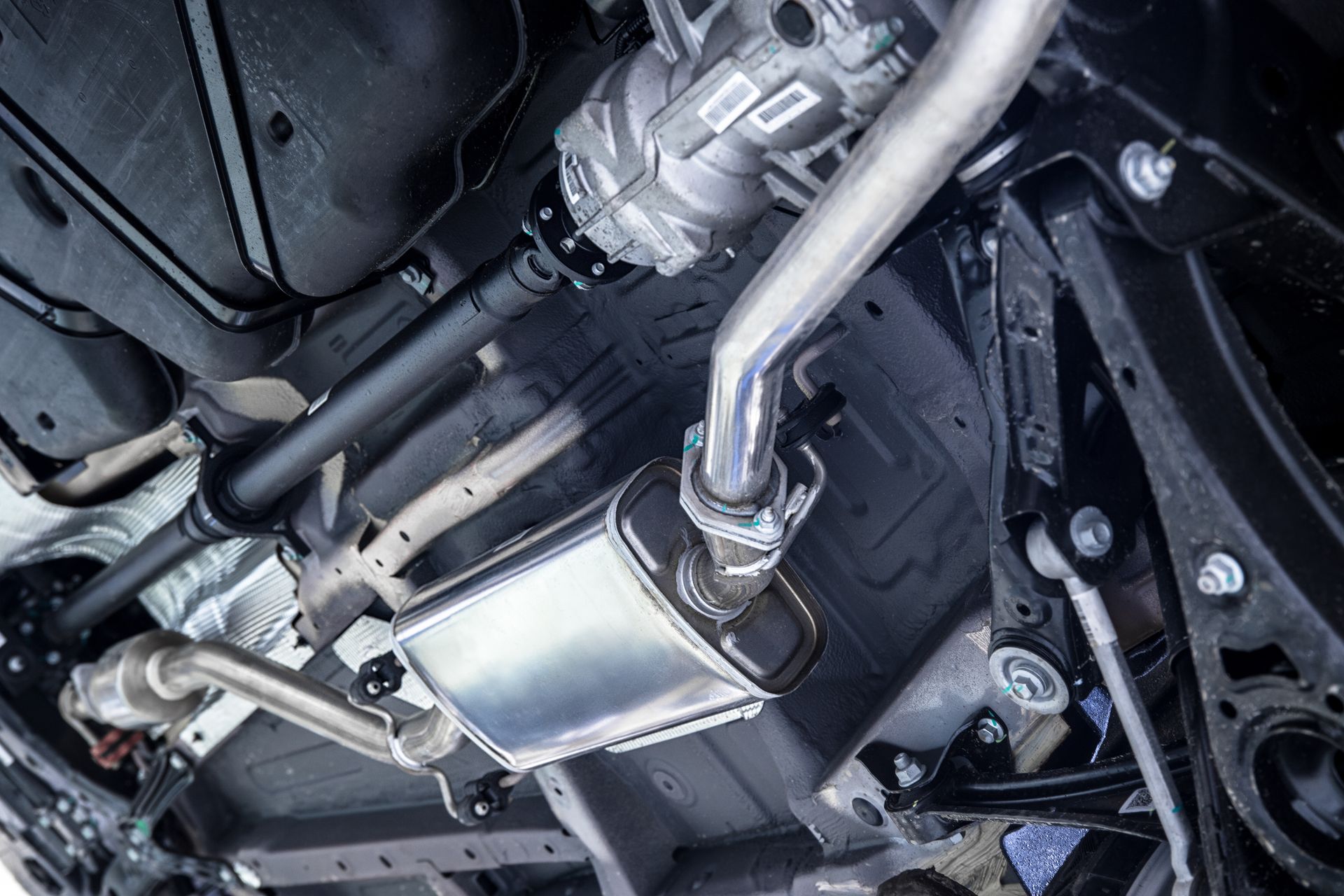
The exhaust system carries hot, toxic combustion gases away from the cabin, cleans them through the catalytic converter, and quiets them through the muffler before they leave the tailpipe. It also feeds the sensors the engine relies on to run cleanly. When any part of that chain leaks, rusts through, or fails, you tend to hear it, smell it, or see it on the dash.

At New Concept, an exhaust and emissions visit starts by locating exactly where the problem is — a leaking joint, a failing converter, a lazy oxygen sensor, or an EVAP fault setting a code — before anything is replaced. We scan the vehicle, inspect the system end to end, and show you what we find so the repair targets the actual cause rather than the easiest part to swap.

Symptom Explorer

Signs of an exhaust or emissions problem

Exhaust trouble usually makes itself heard, smelled, or shown on the dash. Each sign below points to a likely cause, but an inspection and scan are what confirm it.

A note on symptoms — These signs suggest a likely cause, not a diagnosis. A professional inspection and scan are needed to confirm whether the exhaust, a sensor, the converter, or the EVAP system is behind the symptom.

When the exhaust suddenly gets louder — a deep roar or a raspy drone, often worse under acceleration — it usually means a leak has opened up somewhere, from a rusted-through pipe, a failed gasket, or a damaged muffler. The sound tells us there's a leak; an inspection tells us where.

A rattle at idle or over bumps can be a loose or broken hanger letting a pipe or muffler swing, or a heat shield that's come loose. It can also be the internal baffles of a failing converter or muffler breaking apart. Either way, it's worth looking at before a part drops.

A rotten-egg smell near the exhaust often points to the catalytic converter not processing the gases as it should, which can tie back to the converter itself or to the engine running rich. Because it can signal an emissions problem, it's worth having scanned and inspected.

Many emissions faults — a lazy oxygen sensor, a converter below efficiency, or an EVAP leak — set a check-engine code rather than an obvious symptom. We read the stored codes, and the scan is free, to point the diagnosis at the right part of the system.

A clogged or failing catalytic converter can restrict exhaust flow and sap power, and a faulty oxygen sensor can skew the fuel mixture and hurt economy. When performance or mileage slips alongside an emissions code, the exhaust side is worth checking.

Smelling exhaust in the cabin is a safety concern, because it can mean gases are escaping before the tailpipe and finding their way inside. This should be inspected promptly rather than driven on, since exhaust fumes shouldn't reach the people in the car.

How It WorksComponent Explorer

Inside the exhaust & emissions system

01

Catalytic converter

The converter uses a chemical reaction to turn harmful exhaust gases into less harmful ones. When it clogs, overheats, or falls below efficiency, you can get a check-engine code, reduced power, or a sulfur smell. It's an emissions-critical part, so its condition is confirmed before it's condemned.

02

Oxygen (O2) sensors

Oxygen sensors measure the exhaust to tell the engine computer how to balance the fuel mixture. A lazy or failed sensor can hurt economy, trigger a code, and even shorten converter life. Sensors are tested and replaced individually rather than by assumption.

03

Muffler

The muffler quiets the pulses of the exhaust as gases leave the engine. Internal baffles corrode and break down over time, which is often behind a louder exhaust or a rattle. A muffler is replaced when it's rusted through or no longer doing its job.

04

Exhaust pipes & hangers

The pipes route gases from the engine to the tailpipe, and rubber hangers hold the whole system in place. Pipes rust and crack, and worn hangers let the system sag or rattle. Both are inspected end to end for leaks and support.

05

EVAP system

The evaporative emissions system captures fuel vapors from the tank and routes them back to be burned, rather than venting them. A loose gas cap or a small leak can set a check-engine code even when nothing seems wrong, which is why EVAP faults are diagnosed with a scan.

What's Included№ 05 — Scope of Work

Exhaust & emissions repairs we handle

From a simple leak to converter and sensor work, we cover the parts that move, clean, and quiet your exhaust — and we confirm the cause before replacing anything.

01

Catalytic converter replacement

Confirming a converter is actually failed before replacing it to clear emissions codes and restore flow.

Repair details
02

Oxygen sensor replacement

Testing and replacing a lazy or failed O2 sensor that skews the fuel mixture or sets an emissions code.

Repair details
03

Muffler replacement

Replacing a rusted-through or rattling muffler to quiet the exhaust and restore a clean sound.

04

Exhaust pipe repair & replacement

Repairing or replacing corroded and cracked pipes that leak gases or make the exhaust loud.

05

Exhaust leak repair

Locating and sealing leaking joints, gaskets, and flex pipes behind a loud exhaust or interior fumes.

06

Exhaust hanger & mount repair

Replacing worn hangers and mounts so the system stays supported and stops rattling or sagging.

07

Heat shield repair

Securing or replacing a loose heat shield that rattles and protects the body from exhaust heat.

08

Emissions code diagnosis

Reading and interpreting emissions-related check-engine codes to pinpoint the real cause before any repair.

09

EVAP system diagnosis

Diagnosing evaporative-emissions leaks and faults — often as small as a gas cap — that set a check-engine light.

Why Diagnostics Matter

An emissions code is a clue, not a part number

It's a common mistake to read a converter-efficiency code and simply replace the converter. But that same code can be driven by a failing oxygen sensor, an exhaust leak upstream, or an engine running rich — and swapping an expensive converter won't fix any of those. A proper diagnosis settles what's actually causing the code before money changes hands.

We scan the vehicle for stored and live data, inspect the exhaust from the manifold to the tailpipe for leaks and damage, and test the sensors and converter in context. With that picture in hand, we can tell you whether the fix is a sensor, a converter, a leak, or an EVAP repair — and show you why.

  • 01Emissions codes read and interpreted, not guessed
  • 02Exhaust inspected end to end for leaks and damage
  • 03O2 sensors and converter tested in live data
  • 04The real cause confirmed before replacing a converter
The Process

What to expect, start to finish

The same disciplined workflow on every job — so you always know what's happening and why.

  1. 01

    Scan for stored and live data

    We start by pulling any stored emissions codes and watching live data, since many exhaust and emissions faults set a code before they show an obvious symptom. The scan is free and points the diagnosis in the right direction.

  2. 02

    Inspect the exhaust end to end

    We look over the system from the manifold to the tailpipe — pipes, converter, muffler, hangers, and heat shields — for leaks, rust, and damage, including a listen for where a leak is coming from.

  3. 03

    Test the sensors and converter in context

    Rather than condemn an expensive part on a code alone, we test the oxygen sensors and converter against live data to confirm which one is actually at fault.

  4. 04

    Show you the findings and options

    We walk you through what we found with honest, documented results, explain the cause, and lay out the repair options — including what's safety-related versus what can wait.

  5. 05

    Complete the repair and verify it

    After the approved repair, we confirm the leak is gone or the code clears and stays cleared, so you leave with the problem actually resolved rather than temporarily quiet.

When To Come In№ 08

When to have the exhaust & emissions system checked

Exhaust problems rarely fix themselves, and a few of them are safety issues. Here's when to come in.

Watch for
  • A suddenly louder, roaring exhaust
  • A rattle or clunk from underneath
  • A sulfur or rotten-egg smell
  • An emissions-related check-engine light
If you wait
  • A leak can let exhaust fumes reach the cabin
  • A failing converter can clog and cut power
  • A lazy O2 sensor hurts economy and converter life
  • A dropped hanger can let a pipe drag or fall
Stay ahead
  • Have the exhaust inspected when you hear a change
  • Don't ignore an emissions check-engine light
  • Address small leaks before they spread with rust
  • Have the check-engine light scanned promptly — it's free
Safety first
  • Exhaust fumes inside the cabin need prompt attention
  • A rotten-egg smell can signal an emissions fault
  • Never ignore a flashing check-engine light
  • We'll tell you honestly whether it's safe to keep driving
QuestionsFAQ

Frequently asked questions

No. A check-engine light can come from dozens of causes, and even an emissions code pointing at converter efficiency can actually be driven by a failing oxygen sensor, an exhaust leak, or the engine running rich. That's why we diagnose the real cause before recommending an expensive converter — the scan is free, so there's no reason to guess.
A sudden increase in exhaust noise almost always means a leak has opened up — a rusted-through pipe, a failed gasket or joint, or a damaged muffler. Besides being loud, a leak can let fumes reach the cabin, so it's worth having located and repaired rather than lived with. We inspect the system end to end to find exactly where it's leaking.
A sulfur or rotten-egg smell near the exhaust often points to the catalytic converter not processing gases as it should, which can trace to the converter itself or to the engine running rich. Because it can signal an emissions problem, it's worth having scanned and inspected rather than ignored.
Yes. Oxygen sensors tell the engine how to balance the fuel mixture, so a lazy or failed sensor can hurt fuel economy, trigger a check-engine light, and even shorten the life of the catalytic converter. We test the sensors against live data and replace them individually rather than by assumption.
Often it's minor — a loose or worn gas cap is one of the most common EVAP triggers — but the system is part of your vehicle's emissions, so a code shouldn't just be cleared and ignored. We diagnose the EVAP fault to find whether it's as simple as a cap or a small leak elsewhere, and fix the actual cause.
Find A LocationFive Johnson County shops

Service near you

Book at the New Concept shop that's most convenient — same ASE-certified standards and nationwide warranty at every location.

01

Overland Park

9573 W 87th St, Overland Park, KS 66212
02

Merriam

6032 Merriam Dr, Merriam, KS 66203
03

Shawnee

4119 Bonner Industrial Dr, Shawnee, KS 66226
04

Olathe

128 N Mahaffie St, Olathe, KS 66061
05

South Overland Park

7601 W 119th St, Overland Park, KS 66213
Book an Appointment

Ready when you are.

Book online in under a minute, or call and talk to a real person. Honest estimates, no pressure — your dealership alternative in Johnson County.