
Skip to content
New Concept Auto Service Honest · Accurate · New Concept
Mon–Fri · 7:30am–5:30pm 5 Johnson County Shops
№ 01
TPMS Sensor Replacement

TPMS Sensor Replacement

Expert TPMS Sensor Replacement in Overland Park, South Overland Park, Merriam, Shawnee & Olathe, KS.

Book Service
ASE-Certified Technicians5-Yr / 50k-Mile WarrantyProper Sensor Relearn IncludedFree Second Opinion
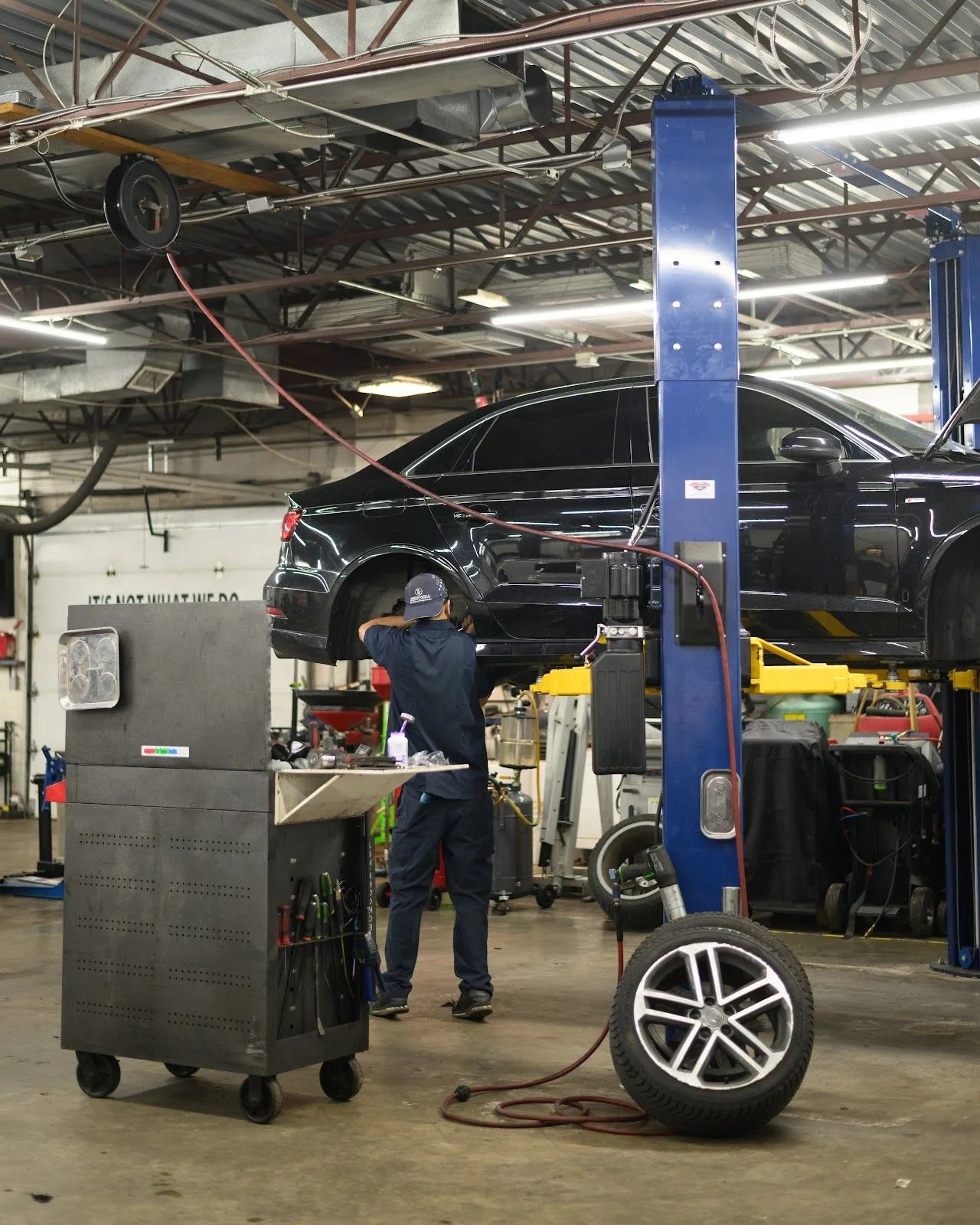
OverviewFig. 02

The sensors inside your wheels watch tire pressure for you — when one quits, the dashboard warning light stays on until the sensor is replaced and relearned.

Most vehicles built in the last decade and a half carry a tire-pressure monitoring system, with a small sensor inside each wheel that reports the tire's pressure to the car. When pressure drops, the system lights the warning on your dash so you can add air before a soft tire becomes a safety or wear problem. The catch is that these sensors run on a tiny internal battery that eventually dies.

At New Concept, we diagnose a TPMS warning before replacing anything, because the light can mean a genuinely low tire, a dead sensor battery, or a sensor damaged during a prior tire change. When a sensor does need replacing, we fit the correct type for your vehicle and perform the relearn procedure so the car recognizes the new sensor and the light goes out — a step that's easy to skip and leaves the system not working right.

Symptom Explorer

Signs a TPMS sensor may need attention

A TPMS warning can mean a low tire or a failing sensor — the two aren't the same. Match what you're seeing to the signs below; each points to a likely cause an inspection confirms.

A note on symptoms — These signs point to a likely cause, not a definitive diagnosis. The warning light can mean a genuinely low tire, so checking pressure and reading the system is the first step before replacing anything.

If the light is lit but all four tires are at the correct pressure, a sensor may have a dead battery or a fault rather than a soft tire. We read the system to see which sensor isn't reporting rather than guessing at which wheel is the problem.

A light that flashes for a short time at startup and then stays solid usually signals a system fault — often a sensor that's stopped communicating — rather than low pressure. That flashing-then-solid pattern is a specific clue we check the system against.

On vehicles that display each tire's pressure, a reading that's blank, dashes, or obviously wrong for one wheel often points to a sensor that's failing or out of battery. We confirm which sensor is dropping out before recommending a replacement.

A sensor can be damaged or knocked out of calibration when a tire is mounted, so a light that appears right after tire work points there. Sometimes it just needs a relearn; sometimes a sensor was disturbed and needs attention.

The internal battery in a TPMS sensor isn't replaceable and lasts a number of years, so an older set can start failing one at a time. When one goes, the others are often close behind, which is worth knowing when you plan the repair.

What's Included№ 04 — Scope of Work

What a TPMS sensor replacement involves

Getting TPMS right is as much about the diagnosis and the relearn as the sensor itself. Here's what a proper job includes.

01

Diagnose the warning first

We check tire pressures and read the TPMS system to tell a genuinely low tire from a failing sensor, so you're not replacing a sensor when a tire simply needed air.

02

Identify the correct sensor

TPMS sensors vary by vehicle and type, and the replacement has to match or be programmed to your car. We identify the right sensor so it will communicate correctly once installed.

03

Dismount the tire and replace the sensor

The affected tire is dismounted so the sensor — which sits inside the wheel, usually at the valve stem — can be replaced, along with the service hardware like the seal and valve components where needed.

04

Remount, balance, and inflate

The tire is remounted, the wheel is rebalanced, and the tire is set to the correct pressure, since disturbing the tire means it should be balanced and inflated properly again.

Repair details
05

Perform the relearn procedure

The vehicle is taught to recognize the new sensor through the manufacturer's relearn procedure — a step that's easy to skip but essential, or the car won't read the new sensor and the light stays on.

06

Confirm the light is out

We verify every sensor is reporting correctly and the warning light has cleared before the vehicle goes back to you, so you leave with a system that actually works.

The Process

What to expect, start to finish

The same disciplined workflow on every job — so you always know what's happening and why.

  1. 01

    Initial inspection

    We start by listening to how the vehicle is behaving, then put it on the lift for a hands-on look at the system you came in for.

  2. 02

    Diagnostic testing

    Where a fault is electronic or intermittent, we scan control modules and test live data instead of guessing at parts.

  3. 03

    Findings & explanation

    You get a plain-language rundown of what we found — often with photos — so the problem is clear before any work is quoted.

  4. 04

    Repair recommendations

    We separate what needs attention now from what can safely wait, with an honest written estimate.

  5. 05

    Your authorization

    Nothing happens until you approve it. No surprise add-ons, no pressure.

  6. 06

    Professional repair

    ASE-certified technicians complete the work with quality parts, torqued and fitted to spec.

  7. 07

    Quality verification

    We re-test and road-check the repair, then hand the vehicle back backed by our nationwide warranty.

When To Come In№ 06

When to address a TPMS sensor

A TPMS light is easy to ignore, but the system is there to protect your tires and your safety. Here's what should prompt a visit.

Watch for
  • The warning light stays on with tires properly inflated
  • A flashing-then-solid TPMS light at startup
  • A blank or clearly wrong pressure reading for one tire
  • The light appeared right after new tires were installed
If you wait
  • A dead sensor can't warn you about a genuinely low tire
  • Driving on a soft tire wears it unevenly and hurts economy
  • An underinflated tire can overheat and fail at speed
  • An ignored light leaves you without an early warning
Stay ahead
  • Have the warning diagnosed rather than ignoring it
  • Ask about TPMS when replacing tires on an older set
  • Have the relearn done any time a sensor is serviced
  • Keep tires at the pressure on your door-jamb sticker
Safety first
  • Don't rely on a dead sensor to catch a low tire for you
  • A properly working TPMS is a real safety feature, not a nuisance
  • Check pressures manually if the system is acting up
  • We'll give you an honest read on which sensors need attention
QuestionsFAQ

Frequently asked questions

The light doesn't always mean a flat — it can mean a tire is a few pounds low, or that a sensor has a dead battery or a fault and isn't reporting. A flashing light that then stays solid usually signals a system problem rather than low pressure. We check the actual pressures and read the system so we can tell you whether you need air or a sensor.
Not necessarily — we can replace just the sensor that's failed. That said, TPMS sensors run on a sealed internal battery that isn't replaceable, and they tend to be a similar age across a set. If one has died of old age, the others may not be far behind, so we'll tell you honestly what we're seeing so you can decide whether to do one or plan for the rest.
A relearn is the procedure that teaches your vehicle to recognize a new or moved sensor so it reads the right tire. It's a required step any time a sensor is replaced, and skipping it is a common reason a warning light stays on after a shop installs a new sensor. We perform the correct relearn for your vehicle and confirm the light is out before you leave.
There's no legitimate way to simply switch the system off, and you wouldn't want to — TPMS is a safety feature that warns you about a low tire before it becomes dangerous. The right fix is to diagnose why the light is on and address it, whether that's adding air or replacing a failed sensor, so the system can do its job.
Yes. Qualifying repairs are backed by our 5-year/50,000-mile nationwide warranty, so the work is covered at thousands of partner shops even if something comes up while you're traveling away from Johnson County. We'll go over exactly what's covered when we review your estimate.
Find A LocationFive Johnson County shops

Service near you

Book at the New Concept shop that's most convenient — same ASE-certified standards and nationwide warranty at every location.

01

Overland Park

9573 W 87th St, Overland Park, KS 66212
02

Merriam

6032 Merriam Dr, Merriam, KS 66203
03

Shawnee

4119 Bonner Industrial Dr, Shawnee, KS 66226
04

Olathe

128 N Mahaffie St, Olathe, KS 66061
05

South Overland Park

7601 W 119th St, Overland Park, KS 66213
Book an Appointment

Ready when you are.

Book online in under a minute, or call and talk to a real person. Honest estimates, no pressure — your dealership alternative in Johnson County.