
Skip to content
New Concept Auto Service Honest · Accurate · New Concept
Mon–Fri · 7:30am–5:30pm 5 Johnson County Shops
№ 01
Brake Fluid Exchange

Brake Fluid Exchange

Expert Brake Fluid Exchange in Overland Park, South Overland Park, Merriam, Shawnee & Olathe, KS.

Book Service
ASE-Certified Technicians5-Yr / 50k-Mile WarrantyManufacturer-Spec FluidAAA Approved
OverviewFig. 02

Brake fluid quietly absorbs moisture over the years — a flush restores the firm pedal and high boiling point your brakes were designed to have.

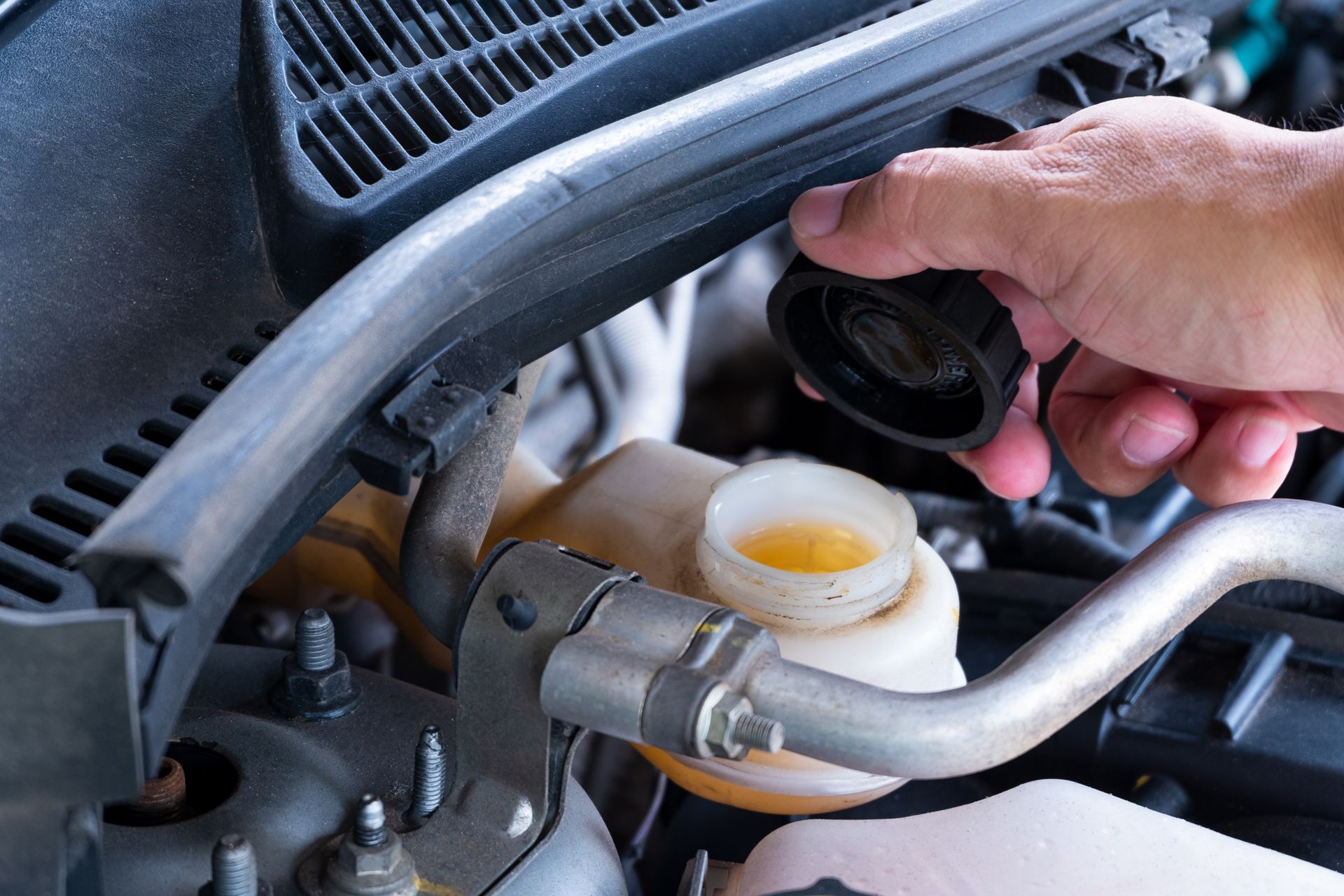
Brake fluid is the hydraulic link between your foot and the pads. It's also hygroscopic, meaning it draws in moisture from the air over time even in a sealed system. As water content climbs, the fluid's boiling point drops and it can turn acidic, quietly corroding the expensive hydraulic parts from the inside while you never touch the brakes themselves.

At New Concept, a brake fluid exchange flushes the old, moisture-laden fluid out of the entire system and refills it with fresh fluid to the manufacturer's specification. The payoff is a firmer pedal, a restored boiling point that resists fade under hard or downhill braking, and real protection for the calipers, master cylinder, and ABS unit. It's one of the most overlooked ways to keep a brake system healthy.

Why Diagnostics Matter

Why fluid condition matters

Unlike pads or rotors, brake fluid gives you almost no warning that it's worn out — there's nothing to hear and nothing to see from the driver's seat. The change is chemical: dissolved moisture lowers the temperature at which the fluid will boil, and once it boils under hard braking, vapor compresses where fluid shouldn't, and the pedal goes soft just when you need it most.

Rather than guess by mileage alone, we test the fluid. A moisture reading and a look at the fluid's color and the manufacturer's recommended interval tell us whether an exchange is due. Catching it on schedule protects the calipers, master cylinder, and ABS components that are far costlier to replace than a flush.

  • 01Fluid moisture content measured, not assumed
  • 02Boiling point protected against brake fade
  • 03Internal corrosion of calipers & ABS prevented
  • 04Exchange timed to the manufacturer's interval
What's Included№ 04 — Scope of Work

What a fluid exchange involves

A proper exchange moves fresh fluid through the whole system — not just the reservoir — and leaves you with a firm, air-free pedal.

01

Test the existing fluid

We check the fluid's moisture content and condition and compare against your vehicle's recommended interval, so an exchange is done because it's due — not just because the car is in the shop.

02

Confirm the correct fluid spec

Brake fluids are not interchangeable — using the wrong DOT specification can damage the system. We identify and use the fluid type your manufacturer calls for.

03

Flush the full system

Old fluid is pushed out and fresh fluid drawn through every wheel circuit, so the moisture-laden fluid sitting down at the calipers and ABS unit is actually replaced, not just the clean-looking fluid in the reservoir.

04

Bleed out trapped air

We bleed each corner to remove any air introduced during the flush. Air in the lines is what makes a pedal feel soft, so this step is what restores a firm, confident pedal.

05

Inspect lines, seals & connections

With the system open, we check the brake lines, hoses, and seals for weeping, corrosion, or damage that could compromise pressure, and flag anything that needs attention.

06

Verify pedal feel and road-test

We confirm a firm pedal at the correct height and road-test the vehicle so you leave knowing the brakes respond the way they should.

When To Come In№ 05

When to exchange your brake fluid

Fluid is a time-and-moisture item more than a mileage one, so it's easy to overlook. These are the cues worth acting on.

Watch for
  • The maintenance interval in your owner's manual has passed
  • A soft, low, or slowly sinking brake pedal
  • Dark, cloudy fluid or a low fluid level
  • Brake fade or a soft pedal after long downhill stops
If you wait
  • Moist fluid boils under hard use and fades the pedal
  • Water in the system corrodes calipers and the master cylinder
  • Old fluid can damage costly ABS components over time
  • A soft pedal lengthens stops in an emergency
Stay ahead
  • Follow the exchange interval in your owner's manual
  • Have the fluid tested for moisture at brake service
  • Flush the fluid whenever hydraulics are opened for repair
  • Keep the reservoir sealed and top off only with the correct spec
Safety first
  • Never top off with the wrong DOT fluid type
  • A pedal that sinks to the floor means stop driving and call
  • Boiled fluid can cause sudden brake fade on a long descent
  • A free second opinion on any brake estimate is always available here
The Process

What to expect, start to finish

The same disciplined workflow on every job — so you always know what's happening and why.

  1. 01

    Initial inspection

    We start by listening to how the vehicle is behaving, then put it on the lift for a hands-on look at the system you came in for.

  2. 02

    Diagnostic testing

    Where a fault is electronic or intermittent, we scan control modules and test live data instead of guessing at parts.

  3. 03

    Findings & explanation

    You get a plain-language rundown of what we found — often with photos — so the problem is clear before any work is quoted.

  4. 04

    Repair recommendations

    We separate what needs attention now from what can safely wait, with an honest written estimate.

  5. 05

    Your authorization

    Nothing happens until you approve it. No surprise add-ons, no pressure.

  6. 06

    Professional repair

    ASE-certified technicians complete the work with quality parts, torqued and fitted to spec.

  7. 07

    Quality verification

    We re-test and road-check the repair, then hand the vehicle back backed by our nationwide warranty.

QuestionsFAQ

Frequently asked questions

It's driven by your vehicle's maintenance schedule rather than a universal number — many manufacturers call for an exchange every couple of years regardless of mileage, because fluid absorbs moisture over time. We follow your owner's manual interval and can test the fluid's moisture content to confirm it's due.
Bleeding removes air from the lines, usually after a repair that opened the hydraulics. A fluid exchange replaces the old fluid throughout the entire system with fresh fluid and also removes any air. An exchange is the maintenance service; bleeding is a step within many brake repairs.
Yes. As fluid absorbs moisture, its boiling point drops — and under hard or repeated braking, boiled fluid turns to vapor that compresses, giving you a soft, fading pedal just when you need firm brakes. Moisture also corrodes the calipers, master cylinder, and ABS unit from the inside. Fresh fluid restores pedal feel and protects those parts.
Possibly — fluid degrades invisibly, so brakes can feel fine while the fluid's boiling point and corrosion protection have quietly dropped. That's why it's a time-based maintenance item and why we can test the moisture content to tell you where yours stands rather than waiting for a symptom.
Qualifying brake work is backed by our 5-year/50,000-mile nationwide warranty. A fluid exchange is a maintenance service, so we'll explain exactly what's covered and recommend the right interval for your vehicle at pickup.
Find A LocationFive Johnson County shops

Service near you

Book at the New Concept shop that's most convenient — same ASE-certified standards and nationwide warranty at every location.

01

Overland Park

9573 W 87th St, Overland Park, KS 66212
02

Merriam

6032 Merriam Dr, Merriam, KS 66203
03

Shawnee

4119 Bonner Industrial Dr, Shawnee, KS 66226
04

Olathe

128 N Mahaffie St, Olathe, KS 66061
05

South Overland Park

7601 W 119th St, Overland Park, KS 66213
Book an Appointment

Ready when you are.

Book online in under a minute, or call and talk to a real person. Honest estimates, no pressure — your dealership alternative in Johnson County.