
Skip to content
New Concept Auto Service Honest · Accurate · New Concept
Mon–Fri · 7:30am–5:30pm 5 Johnson County Shops
№ 01
Radiator Replacement

Radiator Replacement

Expert Radiator Replacement in Overland Park, South Overland Park, Merriam, Shawnee & Olathe, KS.

Book Service
ASE-Certified Technicians5-Yr / 50k-Mile WarrantyFree Second OpinionAAA Approved
OverviewFig. 02

The radiator is where your engine's heat actually leaves the car — when it leaks, corrodes, or clogs, the whole cooling system loses its ability to keep up.

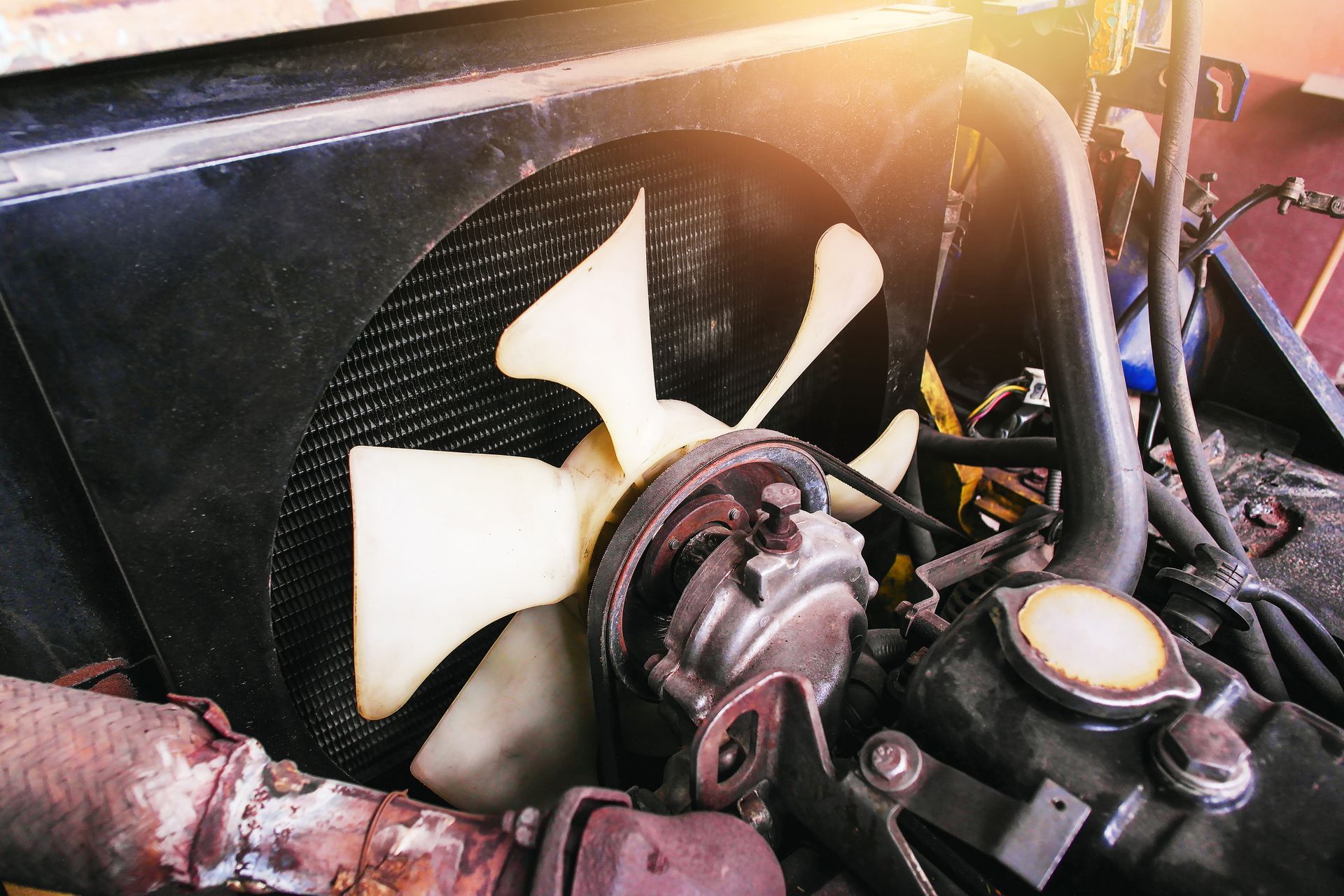
The radiator is the heat exchanger at the front of the cooling system. Hot coolant flows through its thin tubes and fins, and air passing through — from vehicle speed or the cooling fan — carries that heat away. Everything else in the cooling system exists to get coolant to the radiator and back, so when the radiator can't shed heat, the engine runs hot no matter what the rest of the system does.

Radiators fail in a few recognizable ways: the tubes or plastic end tanks develop leaks, internal passages corrode or clog and reduce flow, or the fins get damaged and stop releasing heat efficiently. At New Concept, we confirm the radiator is the real problem — not a hose, a cap, or a pump — and when replacement is the right call, we install a quality unit and refill the system properly so you're not back for air pockets or a recurring leak.

Symptom Explorer

Signs your radiator may need replacing

A failing radiator usually gives warning before it leaves you overheating. Each sign below points to a likely cause, but a pressure test and inspection are what confirm it.

A note on symptoms — These signs suggest a likely cause, not a diagnosis. Because overheating can damage an engine quickly, a professional inspection is the safe way to know what's wrong.

Radiators commonly leak at the seams where the plastic end tanks meet the core, or through tubes that have corroded or been struck by road debris. A puddle or a dried coolant stain at the front is a frequent sign, though a hose or the water pump can leak nearby too, which is why we trace it to the source.

A radiator that's clogged or corroded internally can't move heat the way it should, so the engine may run hot — often most noticeably when climbing a hill, towing, or sitting in traffic. Overheating has several possible causes, so we confirm the radiator is the weak point rather than assuming.

Coolant that looks brown, rusty, or sludgy instead of its normal color can signal internal corrosion — and that debris can clog the radiator's narrow passages. We check coolant condition, because contaminated coolant both points to a problem and shortens a radiator's life.

If you're topping off coolant repeatedly, it's leaving the system somewhere, and the radiator is a common exit point. Chasing the level with top-offs only delays the issue — the leak itself needs to be found, which is what a pressure test is for.

Coolant escaping onto hot parts can produce steam and a sweet odor. If you see steam, it's the point to stop, let the engine cool, and have it checked rather than pressing on and risking engine damage.

What's Included№ 04 — Scope of Work

What's included in a radiator replacement

Replacing a radiator is straightforward when it's done thoroughly — the details are in confirming the cause and refilling the system correctly. Here's what the job covers.

01

Pressure-test and confirm the diagnosis

We pressure-test the cooling system and inspect the radiator, cap, hoses, and connections so the leak or overheating is traced to the radiator itself before anything is replaced.

02

Drain and recover the coolant

The system is drained cleanly, and the condition of the old coolant is noted — contaminated coolant often tells us why the radiator failed and whether a flush of the rest of the system is warranted.

03

Remove the old radiator and inspect around it

Hoses, the fan or shroud, and any brackets are moved aside, and we look over the hoses, cap, and fan while the area is open, since a worn hose or a weak cap can undo a good radiator.

04

Install a quality replacement radiator

A new radiator is fitted with fresh mounts and clamps, hoses are re-secured or replaced as needed, and everything is seated so there's no strain on the connections.

05

Replace the cap and hoses as needed

The radiator cap holds system pressure and is inexpensive, so a weak one is replaced; aging hoses are addressed at the same time so a fresh radiator isn't paired with parts about to fail.

06

Refill, bleed, and verify

The system is refilled with the correct coolant, air is bled out to avoid hot spots, and the engine is run to temperature and re-checked so it leaves with the fan cycling and no leaks.

When To Come In№ 05

When to have the radiator checked

A radiator caught before it fails completely is far cheaper than the overheating it can cause. Here's what should prompt a visit.

Watch for
  • Coolant pooling at the front of the car
  • The engine running hot under load or in traffic
  • Rusty, discolored, or sludgy coolant
  • Coolant you have to keep topping off
If you wait
  • A clogged radiator lets the engine overheat
  • Overheating can cause serious, costly engine damage
  • A seam or tube leak empties the system over time
  • Corrosion can spread to the pump and heater core
Stay ahead
  • Keep coolant fresh so it protects against corrosion
  • Have the radiator and cap checked if you top off often
  • Address a leak before the level drops too far
  • Have the system pressure-tested if you suspect a leak
Safety first
  • Stop and let the engine cool if the gauge hits the red
  • Never open a hot radiator or reservoir cap
  • Don't keep driving through steam from under the hood
  • We'll tell you honestly whether it's safe to keep driving
The Process

What to expect, start to finish

The same disciplined workflow on every job — so you always know what's happening and why.

  1. 01

    Initial inspection

    We start by listening to how the vehicle is behaving, then put it on the lift for a hands-on look at the system you came in for.

  2. 02

    Diagnostic testing

    Where a fault is electronic or intermittent, we scan control modules and test live data instead of guessing at parts.

  3. 03

    Findings & explanation

    You get a plain-language rundown of what we found — often with photos — so the problem is clear before any work is quoted.

  4. 04

    Repair recommendations

    We separate what needs attention now from what can safely wait, with an honest written estimate.

  5. 05

    Your authorization

    Nothing happens until you approve it. No surprise add-ons, no pressure.

  6. 06

    Professional repair

    ASE-certified technicians complete the work with quality parts, torqued and fitted to spec.

  7. 07

    Quality verification

    We re-test and road-check the repair, then hand the vehicle back backed by our nationwide warranty.

QuestionsFAQ

Frequently asked questions

Sometimes a minor issue, like a hose connection or the cap, is the real source and the radiator itself is fine. But modern radiators with plastic end tanks and thin tubes often aren't practical to repair reliably once the core or a tank is leaking, so replacement is usually the lasting fix. We'll tell you honestly which situation you're in after a pressure test.
Overheating that shows up under load or at low speed can point to a radiator that's clogged or no longer shedding enough heat — but it can also be the cooling fan, which does the air-moving work when the car isn't moving fast. Because the two overlap, we test the fan and the radiator's condition to confirm which one is behind it before recommending a repair.
It will if the radiator was the actual cause — which is exactly why we confirm it with a pressure test and inspection first. Overheating can also come from a thermostat, water pump, hose, or low coolant from another leak, so replacing the radiator only solves it when the radiator is the weak point. We diagnose before we replace.
Often, yes. If the old coolant is contaminated or the radiator failed from corrosion, putting the same coolant back can shorten the new radiator's life. We check coolant condition during the job and recommend a flush and fresh fill when it makes sense, so the new radiator starts clean.
Yes. Qualifying repairs are backed by our 5-year/50,000-mile nationwide warranty, which is honored at thousands of partner shops across the country. We'll go over exactly what's covered when we hand you the estimate.
Find A LocationFive Johnson County shops

Service near you

Book at the New Concept shop that's most convenient — same ASE-certified standards and nationwide warranty at every location.

01

Overland Park

9573 W 87th St, Overland Park, KS 66212
02

Merriam

6032 Merriam Dr, Merriam, KS 66203
03

Shawnee

4119 Bonner Industrial Dr, Shawnee, KS 66226
04

Olathe

128 N Mahaffie St, Olathe, KS 66061
05

South Overland Park

7601 W 119th St, Overland Park, KS 66213
Book an Appointment

Ready when you are.

Book online in under a minute, or call and talk to a real person. Honest estimates, no pressure — your dealership alternative in Johnson County.