
Skip to content
New Concept Auto Service Honest · Accurate · New Concept
Mon–Fri · 7:30am–5:30pm 5 Johnson County Shops
№ 01
Cooling System & Radiator Repair

Cooling System & Radiator Repair

Expert Cooling System & Radiator Repair in Overland Park, South Overland Park, Merriam, Shawnee & Olathe, KS.

Book Service
ASE-Certified Technicians5-Yr / 50k-Mile WarrantyHonest Photo-Documented EstimatesAAA Approved
OverviewFig. 02

The cooling system has one job that the whole engine depends on — holding a safe operating temperature — and when it slips, overheating can cause expensive damage fast.

An engine produces a tremendous amount of heat, and the cooling system exists to carry that heat away and keep everything in a narrow, safe temperature range. When a hose, pump, thermostat, or radiator starts to fail, the first signs are often subtle — a gauge that creeps higher than usual, a sweet smell, or a small puddle — before they become an overheating event.

At New Concept, a cooling-system visit starts with a pressure test and a look at coolant condition and circulation, so we can find the weak point before it leaves you stranded. Because overheating is one of the costliest things that can happen to an engine, catching a cooling problem early is one of the best repairs you can make.

Symptom Explorer

Signs your cooling system needs attention

Cooling problems give you warning if you know what to watch for. Each sign points to a likely cause, but a pressure test and inspection are what confirm it.

A note on symptoms — These signs suggest a likely cause, not a diagnosis. Because overheating can damage an engine quickly, a professional inspection is the safe way to know what's wrong.

A gauge that climbs above its normal range, or a dedicated overheating warning, means the engine is holding more heat than the system is shedding. A thermostat, water pump, radiator, low coolant, or a leak can all be behind it. If the gauge reaches the red, it's safest to stop and let the engine cool.

Coolant is usually green, orange, pink, or yellow depending on the type, and a puddle or drip means it's escaping from a hose, the radiator, the water pump, or a connection. Because the system needs to stay full and pressurized to work, a leak is worth tracing before the level drops too far.

Coolant has a distinct sweet odor, so smelling it often means it's leaking and reaching something warm. If you smell it through the vents, it can point to a heater-core issue; outside, it usually means a leak under the hood. Either way, it's worth a look before coolant runs low.

Cabin heat comes from engine coolant, so a heater that only blows cold can signal low coolant, a stuck thermostat, or air trapped in the system. It's an early clue that circulation isn't right, and it often shows up before the temperature gauge does.

Many vehicles monitor coolant level and will warn you when it drops. Low coolant almost always means a leak somewhere, and continuing to drive low raises the risk of overheating. Topping it off is only a temporary step — the leak itself needs to be found.

Visible steam or a hot, boiling smell usually means coolant is escaping onto hot components or the engine is already overheating. This is the point to stop driving, let it cool, and have it checked, rather than pressing on and risking engine damage.

How It WorksComponent Explorer

Inside the cooling system

01

Radiator

The radiator sheds engine heat into the air as coolant flows through its thin passages. Over time it can clog, corrode, or develop leaks, which reduces how much heat it can release — so a radiator that's failing often shows up as gradual overheating.

02

Water pump

The water pump circulates coolant through the engine and radiator. When its bearing or seal wears, it can leak or stop moving coolant effectively, and the engine overheats. A whine or a leak near the pump is a common sign it needs attention.

03

Thermostat

The thermostat regulates coolant flow so the engine warms up quickly and then holds the right temperature. Stuck closed, it causes overheating; stuck open, the engine runs cool and the heater may underperform — which is why it's a frequent suspect in temperature complaints.

04

Hoses & connections

Rubber hoses carry coolant between the engine, radiator, and heater core. They harden, swell, and crack with age and heat, and a burst hose can empty the system quickly — so their condition is checked as part of any cooling service.

05

Coolant & reservoir

Coolant both transfers heat and protects the system from corrosion and freezing, and the reservoir holds the overflow as it expands and contracts. Coolant breaks down over time, so its condition and level are checked, and a flush restores its protective properties.

06

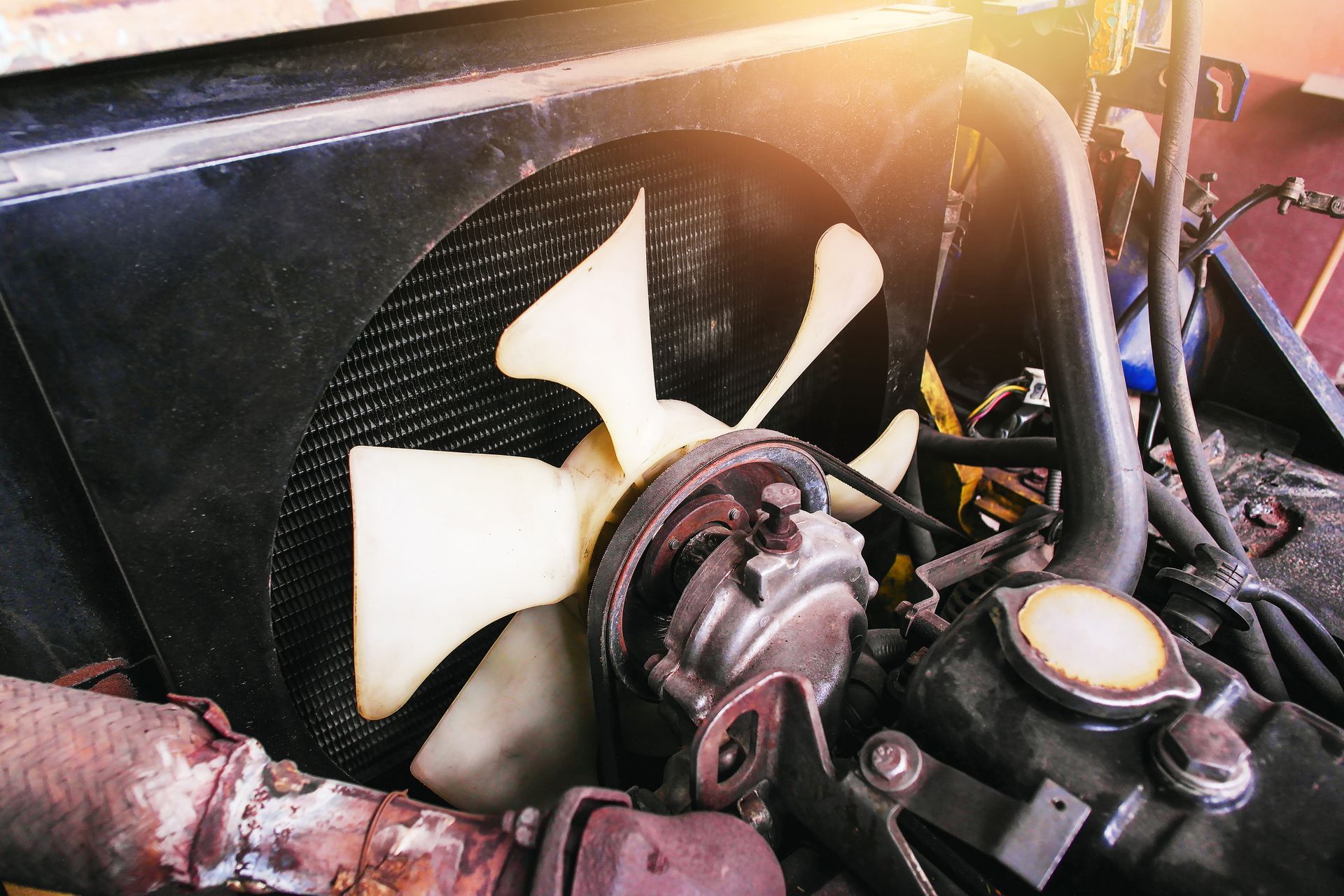
Radiator fan

The fan pulls air through the radiator at low speeds and when stopped, when there's little natural airflow. A failed fan or its control can let the engine overheat in traffic even when it stays cool on the highway, which is a telling symptom.

What's Included№ 05 — Scope of Work

Cooling system & radiator repairs we handle

From leaks and hoses to pumps, thermostats, and radiators, we cover the parts that keep your engine from overheating — starting with a pressure test to find the weak point.

01

Radiator replacement

Replacing a clogged, corroded, or leaking radiator that can no longer shed enough heat.

Repair details
02

Water pump replacement

Replacing a pump that leaks or no longer circulates coolant effectively, before it causes overheating.

Repair details
03

Thermostat replacement

Replacing a thermostat stuck open or closed so the engine reaches and holds the right temperature.

Repair details
04

Coolant flush & exchange

Replacing broken-down coolant to restore its heat-transfer and anti-corrosion protection.

Repair details
05

Coolant leak diagnosis & repair

Pressure-testing the system to trace a leak to its source and seal it before the level drops too far.

06

Radiator hose replacement

Replacing hardened, swollen, or cracked hoses before one bursts and empties the system.

07

Radiator fan diagnosis & repair

Finding why the cooling fan isn't running, which often causes overheating in traffic but not at highway speed.

08

Heater core diagnosis

Investigating a heater that blows cold or a sweet smell inside the cabin that can point to the heater core.

09

Overheating diagnosis

Systematically checking the cooling system to find why an engine runs hot before heat can cause damage.

When To Come In№ 06

When to have your cooling system checked

Cooling repairs are far cheaper than the engine damage overheating can cause. Here's what should prompt a visit.

Watch for
  • The temperature gauge running higher than usual
  • A coolant puddle or a sweet smell
  • A heater that blows cold or a low-coolant light
  • Steam or a hot smell from under the hood
If you wait
  • Overheating can cause serious, costly engine damage
  • A slow coolant leak can empty the system over time
  • A failed fan lets the engine overheat in traffic
  • Old coolant loses its anti-corrosion protection
Stay ahead
  • Flush coolant on your owner's manual's interval
  • Have hoses and the pump checked for early wear
  • Address a low-coolant light promptly — find the leak
  • Have the system pressure-tested if you suspect a leak
Safety first
  • Stop and let the engine cool if the gauge hits the red
  • Never open a hot radiator or reservoir cap
  • Don't keep driving through steam from under the hood
  • We'll tell you honestly whether it's safe to keep driving
Why Diagnostics Matter

Finding the leak before it finds you

Overheating can come from a thermostat, a water pump, a radiator, a hose, a fan, or simply low coolant from a leak — and the wrong guess can leave the engine at risk. Topping off coolant without finding the leak only delays the problem. A proper cooling diagnosis pinpoints the weak point before it becomes a roadside event.

We pressure-test the system to reveal leaks, check coolant condition and circulation, and test the thermostat, pump, and fan behavior. With that in hand, we can tell you exactly which component needs attention — and show you the evidence — so the repair addresses the real cause.

  • 01System pressure-tested to reveal hidden leaks
  • 02Coolant condition and level checked by hand
  • 03Thermostat, pump & fan behavior verified
  • 04The real cause shown before any repair
The Process

What to expect, start to finish

The same disciplined workflow on every job — so you always know what's happening and why.

  1. 01

    Initial inspection

    We start by listening to how the vehicle is behaving, then put it on the lift for a hands-on look at the system you came in for.

  2. 02

    Diagnostic testing

    Where a fault is electronic or intermittent, we scan control modules and test live data instead of guessing at parts.

  3. 03

    Findings & explanation

    You get a plain-language rundown of what we found — often with photos — so the problem is clear before any work is quoted.

  4. 04

    Repair recommendations

    We separate what needs attention now from what can safely wait, with an honest written estimate.

  5. 05

    Your authorization

    Nothing happens until you approve it. No surprise add-ons, no pressure.

  6. 06

    Professional repair

    ASE-certified technicians complete the work with quality parts, torqued and fitted to spec.

  7. 07

    Quality verification

    We re-test and road-check the repair, then hand the vehicle back backed by our nationwide warranty.

QuestionsFAQ

Frequently asked questions

It's risky. Sustained overheating can cause serious, expensive engine damage, so if the gauge is in the red or you see steam, the safest move is to pull over, let the engine cool, and have it looked at before driving further. If it's borderline, give us a call and we'll help you decide. Never open a hot radiator or reservoir cap.
Coolant breaks down over time and loses its heat-transfer and anti-corrosion protection, so it's replaced on an interval that varies by vehicle and coolant type. Your owner's manual is the best source, and we're glad to check your coolant's condition at any visit. A flush at the right interval helps protect the radiator, pump, and heater core.
That pattern often points to the radiator fan. At highway speed, natural airflow cools the radiator, but in stop-and-go traffic the fan has to do that work — so if the fan or its control has failed, the engine heats up when you slow down. It's a telling symptom, and we test the fan and its circuit to confirm.
Yes, because the cooling system has to stay full and pressurized to work. Even a slow leak will eventually lower the level enough to risk overheating, and overheating is far more costly than fixing the leak. We pressure-test the system to find the source so it can be sealed before the level gets low.
Yes. If another shop quoted you for a radiator, water pump, or other cooling work, we're glad to inspect the vehicle and give you an honest written estimate for comparison at no charge. Present the coupon from our Specials page at check-in.
Find A LocationFive Johnson County shops

Service near you

Book at the New Concept shop that's most convenient — same ASE-certified standards and nationwide warranty at every location.

01

Overland Park

9573 W 87th St, Overland Park, KS 66212
02

Merriam

6032 Merriam Dr, Merriam, KS 66203
03

Shawnee

4119 Bonner Industrial Dr, Shawnee, KS 66226
04

Olathe

128 N Mahaffie St, Olathe, KS 66061
05

South Overland Park

7601 W 119th St, Overland Park, KS 66213
Book an Appointment

Ready when you are.

Book online in under a minute, or call and talk to a real person. Honest estimates, no pressure — your dealership alternative in Johnson County.